New York Snow Day Calculator: Chances, Lake Snow and Remote Days
By our rule of thumb, about 5 inches closes schools in New York City and 14.5 in Syracuse. Only districts decide; the state allows remote days and can forgive up to five weather days.

- Under 5%
- 5 to 24%
- 25 to 49%
- 50 to 74%
- 75% or more
The next school day in New York
Worked out from the National Weather Service forecast, 3:07 PM EDT, Thursday.
- New York<1% snow dayFriday: no snow
- Buffalo<1% snow dayFriday: no snow
- Yonkers<1% snow dayFriday: no snow
- Rochester<1% snow dayFriday: no snow
- Syracuse<1% snow dayFriday: no snow
- Albany<1% snow dayFriday: no snow
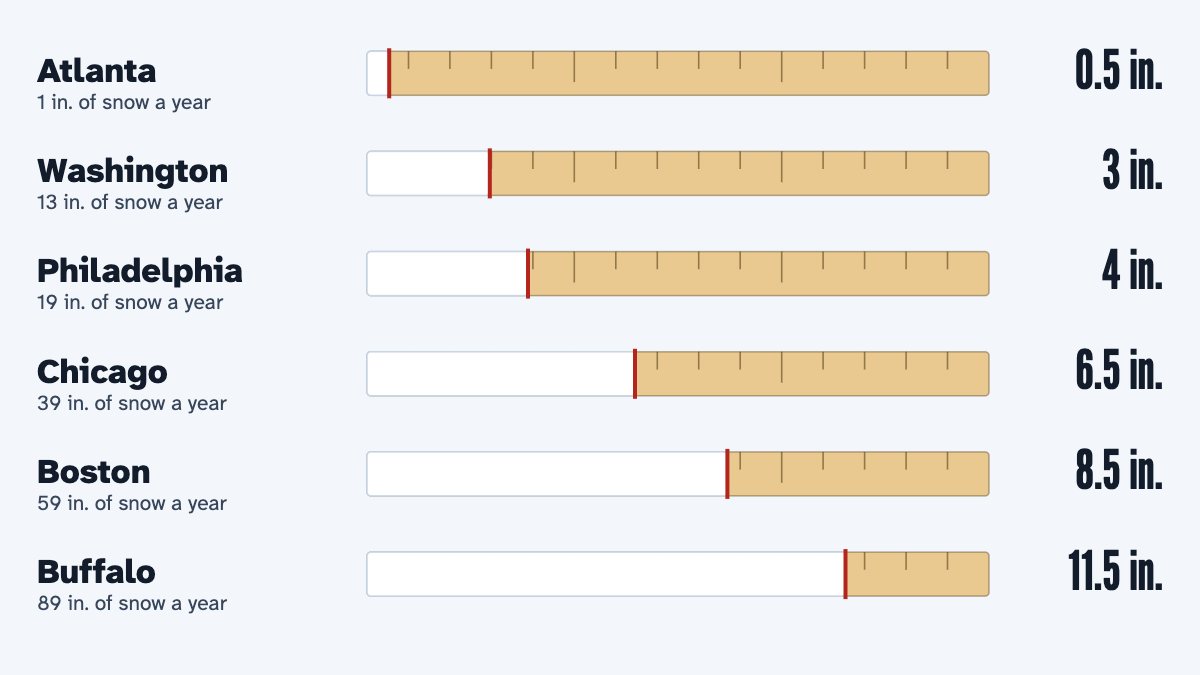
New York has two kinds of snow day. New York City averages about 28.5 inches of snow a year, and by our rule of thumb its schools close about half the time once 5 inches falls overnight. Syracuse averages about 120 inches, and there the same even odds come only at about 14.5 inches. Buffalo and Rochester, at about 90 inches a year, sit close to a foot.
The difference is lake-effect snow, which falls in narrow, heavy bands: one town can be buried while the next sees flurries. That is why the calculator reads the National Weather Service forecast for the part of your ZIP code where most people live, hour by hour.
Whatever falls, the school year has a floor. Under section 3604 of the Education Law, a district must be in session at least 180 days or lose state aid. Since 2022 it may also teach remotely on a day it would otherwise close, so a closed building no longer always means a day off.
How much snow closes school in New York?
By our rule of thumb, about 5 inches overnight in New York City, 5.5 in Yonkers, 8.5 in Albany, 11.5 in Buffalo, 12 in Rochester and 14.5 in Syracuse. Each is the snowfall at which schools in that city close about half the time, worked out from its normal yearly snowfall.
New York's six largest cities: normal snowfall a year (NOAA 1991–2020) and the snowfall and wind chill at which, by our rule of thumb, schools there usually close.
| City | Normal snowfall | Usually closes at | Cold point (wind chill) |
|---|---|---|---|
| New York | 28.5 in. a year | 5 in. of snow | −14°F |
| Buffalo | 88.6 in. a year | 11.5 in. of snow | −24°F |
| Yonkers | 30 in. a year | 5.5 in. of snow | −16°F |
| Rochester | 92.3 in. a year | 12 in. of snow | −24°F |
| Syracuse | 120.5 in. a year | 14.5 in. of snow | −26°F |
| Albany | 57 in. a year | 8.5 in. of snow | −26°F |
Our rule of thumb: the usual closing point is 0.5 × (normal snowfall a year)0.7, the cold point the normal December–February low minus 45°F. How the calculator works.
Syracuse gets more than four times New York City’s snow, yet its closing point is less than three times higher: the rule grows with snowfall, but more slowly. If your district rarely closes, or closes at the first flake, tell the calculator and it moves the point.
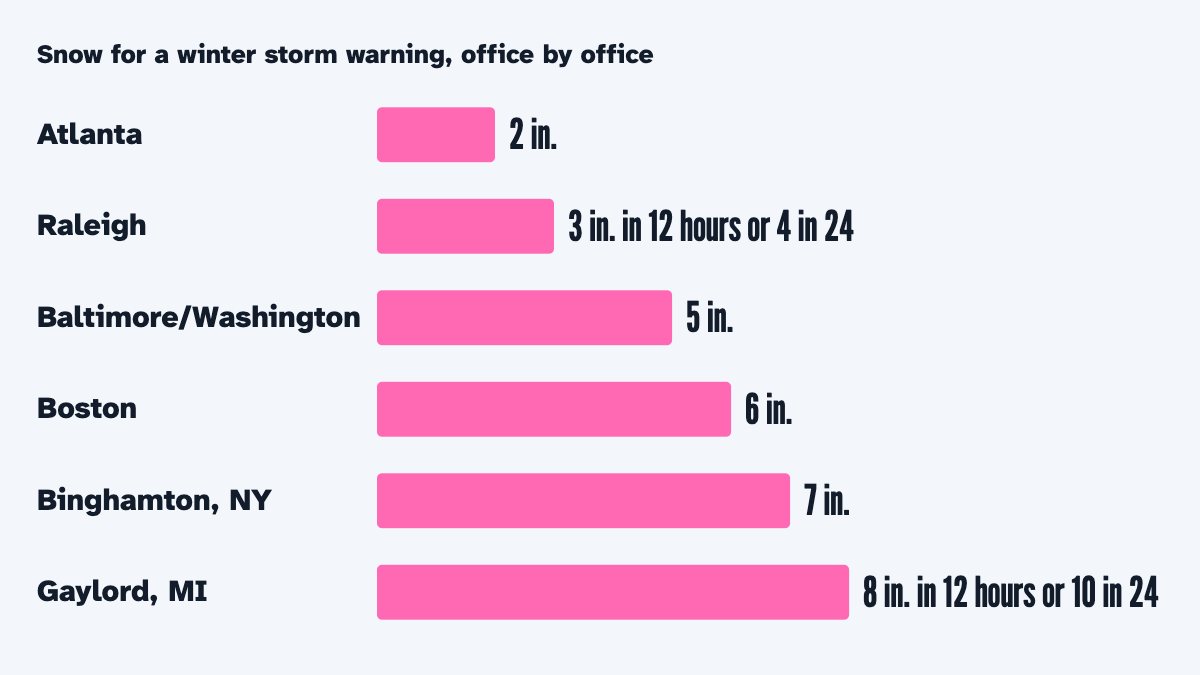
Timing counts as much as depth: snow that falls overnight or during the bus run counts in full, snow the morning before only about a third, since roads have time to be cleared. The Weather Service draws its own lines too. Its Binghamton office, which covers central and southern New York, issues a Winter Storm Warning for 7 inches or more in one storm. A warning for your area lifts the calculator’s chance more than a watch or an advisory does.
Where does New York get the most snow?
In small towns on high ground east of Lake Ontario and south of Lake Erie, not in any city. NOAA has snowfall normals for 106 New York weather stations, with a middle value of 72.4 inches a year, and four of them average more than 200: a station 12 miles north-northwest of Hooker (227.7 inches), Sherman (224.5), Perrysburg (208.3) and Highmarket (203.1).
Normal snowfall a year and normal December to February low at each of the 106 weather stations in New York with a snowfall normal in NOAA's U.S. Climate Normals for 1991–2020, with each station's location, elevation and how complete its record is.
The 10 snowiest and 5 least snowy of 106 stations in New York
| Station | Normal snowfall | Dec–Feb low | Elevation |
|---|---|---|---|
| Hooker 12 Nnw | 227.7 in. | — | 1,478 ft |
| Sherman | 224.5 in. | — | 1,560 ft |
| Perrysburg | 208.3 in. | 18°F | 1,210 ft |
| Highmarket 2W | 203.1 in. | 7°F | 1,804 ft |
| Colden 1W | 167.6 in. | 18°F | 1,535 ft |
| Boonville 4 Ssw | 164 in. | 11°F | 1,550 ft |
| Fulton | 159 in. | 18°F | 360 ft |
| Old Forge | 157.9 in. | 9°F | 1,748 ft |
| Big Moose 3 Se | 153.5 in. | 9°F | 1,760 ft |
| Camden | 151.3 in. | 14°F | 580 ft |
| … | |||
| Bridgehampton | 26.8 in. | 25°F | 42 ft |
| New York Jfk International Airport | 25.9 in. | 29°F | 11 ft |
| Oceanside | 25.5 in. | 28°F | 12 ft |
| Ny Ave V Brooklyn | 24.5 in. | 30°F | 20 ft |
| Mineola | 18.5 in. | 29°F | 96 ft |
Download “Normal snowfall at New York weather stations, 1991–2020” (CSV, opens in Excel)
Built from: U.S. Climate Normals, 1991–2020 (National Centers for Environmental Information).
Fulton, close to Lake Ontario, averages 159 inches at only about 360 feet above sea level. The least snowy stations are on Long Island and in the city: Mineola averages 18.5 inches, a Brooklyn station 24.5 and Oceanside 25.5.
Lake snow is patchy by nature. The Weather Service issues a separate Lake Effect Snow Warning for heavy bands that hit a limited area, and a 2023 notice says its Buffalo, Binghamton and Albany offices continue to issue them zone by zone. Even one city is not one forecast: Buffalo’s closing procedures note that weather varies across “the 40 square miles that constitute the City of Buffalo.”
Do snow days have to be made up in New York?
Only when a district would fall below the state minimum, and New York counts both days and hours. Education Law section 3604 requires 180 days in session, and each missing day costs the district one 180th of its foundation aid. A state regulation adds 900 hours a year for kindergarten to grade 6 and 990 for grades 7 to 12, as the State Education Department explains.
The Commissioner of Education may forgive the lost aid in two cases. One is a day the superintendent had to close under a declared state or local emergency. The other covers up to five days lost to “extraordinarily adverse weather conditions,” but only if the district could not make them up, and the law sets the test: the district must first use its scheduled vacation days that fall before the June Regents exams.
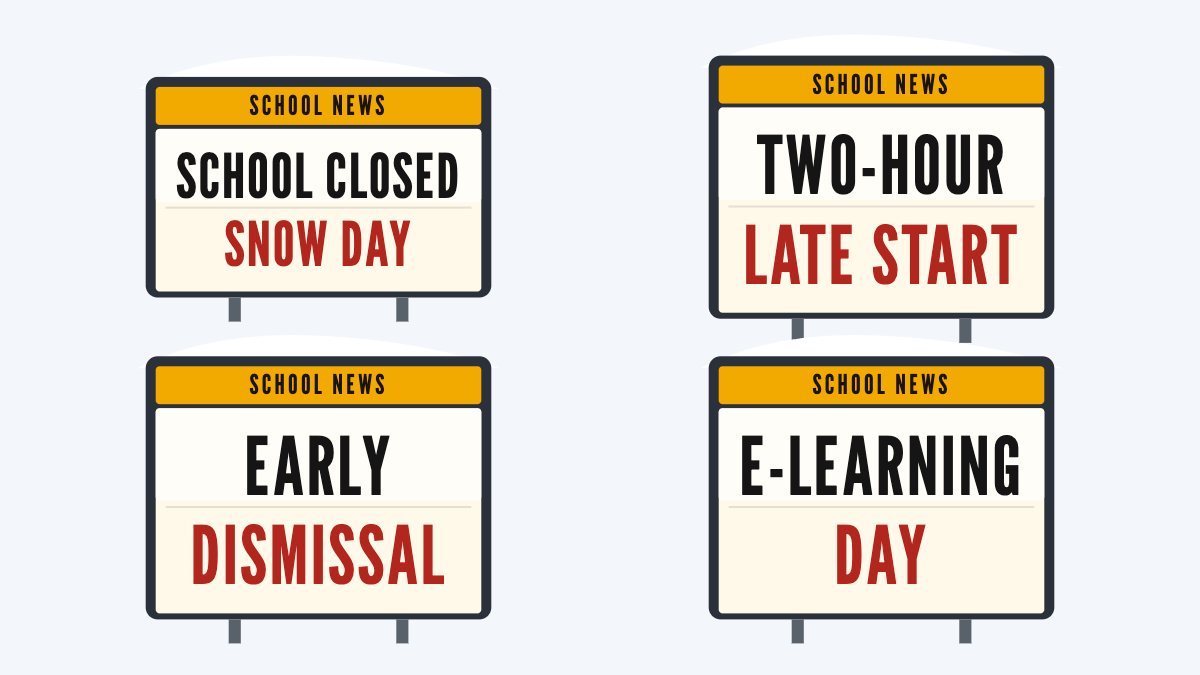
Short days are safe. Under the state rule on instructional time, up to 2 hours lost to a late start or early release still count if the superintendent certifies them.
Can New York schools switch to remote learning instead?
Yes, if the district chooses to. A state rule made permanent in 2022, after a snow day pilot in the 2020–21 and 2021–22 school years, lets a district that would otherwise close for an emergency stay in session and teach remotely. The day counts toward both the 180 days and the hours.
The State Education Department’s questions and answers set out the limits: “Schools are not required to provide remote instruction for students on emergency closure days.” A remote day cannot be planned on the calendar, needs no advance approval from the state, and is certified by the superintendent at the end of the year. Since 2023–24 it must follow the district’s Emergency Remote Instruction Plan, with certified teachers in regular daily contact with students. We found no limit on how many such days a district may use.
New York City used the rule on Monday, January 26, 2026: every public school building closed and instruction continued remotely, with the state’s 180-day requirement named among the reasons. The city’s announcement says charter and private schools decide for themselves, but charter schools that share a city school building close when the city’s schools go remote. Buffalo’s procedures list four kinds of closing: everyone home, or staff in buildings while students stay home, each with or without remote learning.
How cold does it have to be to close school in New York?
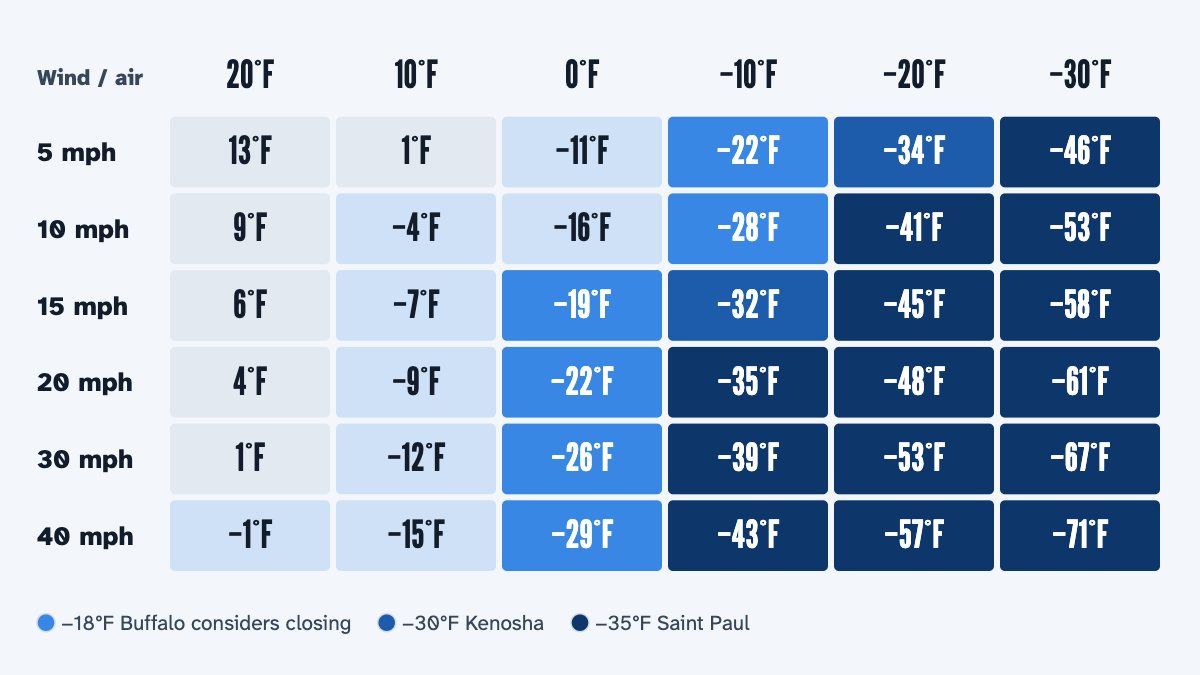
The state sets no number, so it depends on your district. Buffalo Public Schools says it will still consider closing at a wind chill of −18°F, and that an Extreme Cold Watch or Warning from the Weather Service starts a fuller review.
The Weather Service sets its cold alerts office by office. Its wind chill page gives Rochester as the example: a warning at −25°F or colder, an advisory from −15°F to −24°F. In October 2024 it renamed the Wind Chill Warning the Extreme Cold Warning, and the Wind Chill Advisory the Cold Weather Advisory.
The calculator reads the forecast wind chill for bus-stop hours, 5 to 9 AM. By our rule of thumb, schools start closing for cold at about −14°F in New York City, −16°F in Yonkers, −24°F in Buffalo and Rochester, and −26°F in Syracuse and Albany: 45 degrees below each city’s normal December-to-February low.
Who decides, and when do New York families hear?
The superintendent closes the schools: the law speaks of days “the superintendent was required to close.” The state decides only afterwards whether to forgive the lost aid.
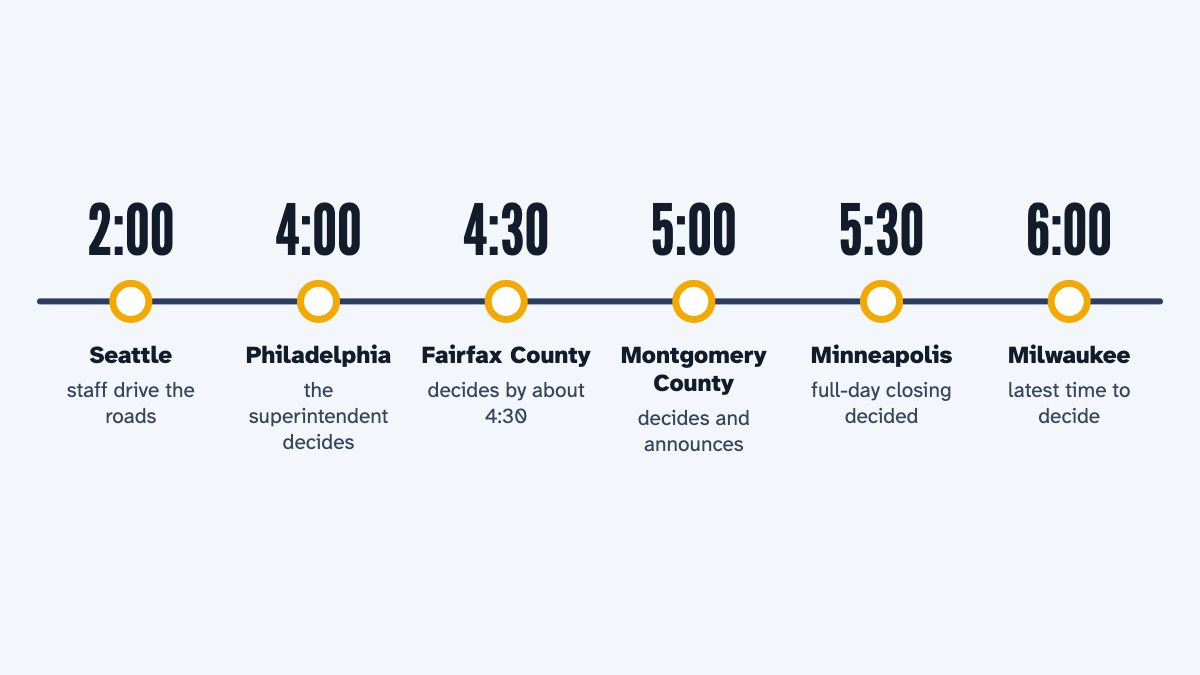
Buffalo publishes its clock, on a procedures page titled for the 2025–26 school year. For a storm in the forecast, the district assesses it from 11 a.m. through 9 p.m.; for snow that arrives overnight, it keeps assessing until 5:00 a.m. and decides before then. It weighs Weather Service reports, road crews, bus and transit operators, its buildings, driving bans and what similar districts do. Decisions about after-school activities come by noon.
New York City’s January 2026 switch was announced by the mayor and the schools chancellor the day before. Wherever you are, check your district’s website, app or local TV and radio: the calculator gives odds, and only the district calls the day.
So will New York schools close tomorrow?
Only your district can say, but the odds follow a pattern: the snowier the town, the more snow it takes, and a closed building may now mean a remote day.
Snow days in New York
- Snow that closes schools
- New York City 5 in
- Albany 8.5 in
- Buffalo 11.5 in
- Syracuse 14.5 in
- The school year
- 180 days in session
- 900 or 990 hours
- up to 5 weather days forgiven
- Remote days
- Allowed since 2022
- the district’s choice
- no limit found
- Cold
- Buffalo −18°F wind chill
- NWS Rochester warning −25°F
- our points −14°F to −26°F
- Who decides
- The superintendent
- Buffalo before 5 a.m.
- check district news
Questions people ask
How many snow days are New York schools allowed?
The state sets no number. It sets 180 days in session, so the days a district schedules beyond that are its room for closings. After those, the Commissioner may forgive up to five weather days, once the district has used its vacation days before the June Regents exams.
Does New York City still have snow days?
In January 2026 the city closed its school buildings and taught remotely instead of giving a day off. State rules leave that choice to the district each time, so a plain closing is still possible.
Does a two-hour delay count as a school day in New York?
Yes. Up to 2 instructional hours lost to a late start or early release still count that day, if the superintendent certifies it, so a delay does not have to be made up.
What does a Lake Effect Snow Warning mean for school?
The Weather Service expects heavy lake bands in your zone: in the Binghamton office’s area, at least 7 inches in 12 hours or 9 in 24. The calculator counts it as a warning, but a band that misses your ZIP code by a few miles can leave roads clear, so wait for your district’s word.
Sources: New York Education Law § 3604; State Education Department, remote instruction under emergency conditions: questions and answers; Buffalo Public Schools, procedures for emergency school closing (November 2025).
Facts checked October 29, 2026.
More guides
-
-
-
-
-
-