Vermont Snow Day Calculator: Chances, Waivers and the 175-Day Rule
By our rule of thumb, 10.5 to 12 inches of snow closes schools in Vermont's biggest towns half the time. Schools need 175 days, and the State Board can waive lost ones.

- Under 5%
- 5 to 24%
- 25 to 49%
- 50 to 74%
- 75% or more
The next school day in Vermont
Worked out from the National Weather Service forecast, 3:07 PM EDT, Thursday.
- Burlington<1% snow dayFriday: no snow
- South Burlington<1% snow dayFriday: no snow
- Rutland<1% snow dayFriday: no snow
- Essex Junction<1% snow dayFriday: no snow
- Winooski<1% snow dayFriday: no snow
- Barre<1% snow dayFriday: no snow
In Vermont’s biggest towns, 10.5 to 12 inches of snow is where schools close about half the time, by our rule of thumb. Burlington, South Burlington, Essex Junction, Rutland and Winooski sit at 10.5 inches, and Barre at 12.
These are snowy places. The six on our map normally get 76.2 to 95.1 inches a winter, and the middle of Vermont’s 31 NOAA weather stations gets 87.2. They are cold places too: our cold points run from −30°F to −35°F, the coldest in Barre.
Vermont’s law counts days, not hours: at least 175 student attendance days a year. A district that loses days to closings it could not control can petition the State Board for a waiver within 10 days, and if the Board does not act, the waiver is granted.
How much snow closes school in Vermont?
Between 10.5 and 12 inches in the six places on our map, by our rule of thumb. That is the amount at which schools close about half the time.
Vermont's six largest cities: normal snowfall a year (NOAA 1991–2020) and the snowfall and wind chill at which, by our rule of thumb, schools there usually close.
| City | Normal snowfall | Usually closes at | Cold point (wind chill) |
|---|---|---|---|
| Burlington | 76.2 in. a year | 10.5 in. of snow | −30°F |
| South Burlington | 79.6 in. a year | 10.5 in. of snow | −30°F |
| Rutland | 79.2 in. a year | 10.5 in. of snow | −34°F |
| Essex Junction | 79.5 in. a year | 10.5 in. of snow | −30°F |
| Winooski | 76.3 in. a year | 10.5 in. of snow | −30°F |
| Barre | 95.1 in. a year | 12 in. of snow | −35°F |
Our rule of thumb: the usual closing point is 0.5 × (normal snowfall a year)0.7, the cold point the normal December–February low minus 45°F. How the calculator works.
Barre, with 95.1 inches a year, has the highest point on the map, 12 inches. The other five, from Burlington (76.2) to South Burlington (79.6), all sit at 10.5. Our rule grows more slowly than snowfall, so even Barre’s extra snow, about 16 to 19 inches a winter, raises its point by only 1.5.
Ice works the same way. By our rule of thumb, about a tenth of an inch of ice closes schools almost anywhere, but in snowy places like these the point rises toward 0.18 inch. Snow falling above freezing counts less, because it lands on wet roads.
If your district is known for staying open through storms that would close others, tell the calculator it rarely closes. If it calls off school early, choose closes easily.
Do snow days have to be made up in Vermont?
Only when they leave a school short of 175 days, and even then the State Board can excuse them. 16 V.S.A. § 1071 asks for “At least 175 student attendance days in each school year,” plus at least 5 teacher in-service days.
A day counts only if a majority of enrolled students are recorded on the school roll as in attendance. So a stormy day when most students stay home does not count toward the 175, even with the doors open.
When a school closes for reasons outside the board’s control, the board may petition the State Board for a waiver. The petition is due within 10 days of each closing and no later than June 15 of that school year. If the State Board fails to act on it at its meeting, the petition is deemed approved, and the district is treated as having met the requirement.
A separate waiver, after local voters approve, lets the State Board set the 175-day rule aside if it is satisfied that equivalent education will be kept up or improved. The section sets no hours minimum; the school board fixes the length of the school day within the State Board’s minimum.
We did not find a set number of snow days a district may skip without a petition. § 1071 was last amended in 2013, effective February 14, 2014, and the legislature’s online copy includes the 2026 session’s actions.
Can Vermont schools switch to remote learning instead?
The state rules we read do not provide for it. § 1071 says nothing about online or remote days replacing a weather closure, and the State Board’s Education Quality Standards (its Rule Series 2000) have no rule on closures or remote days.
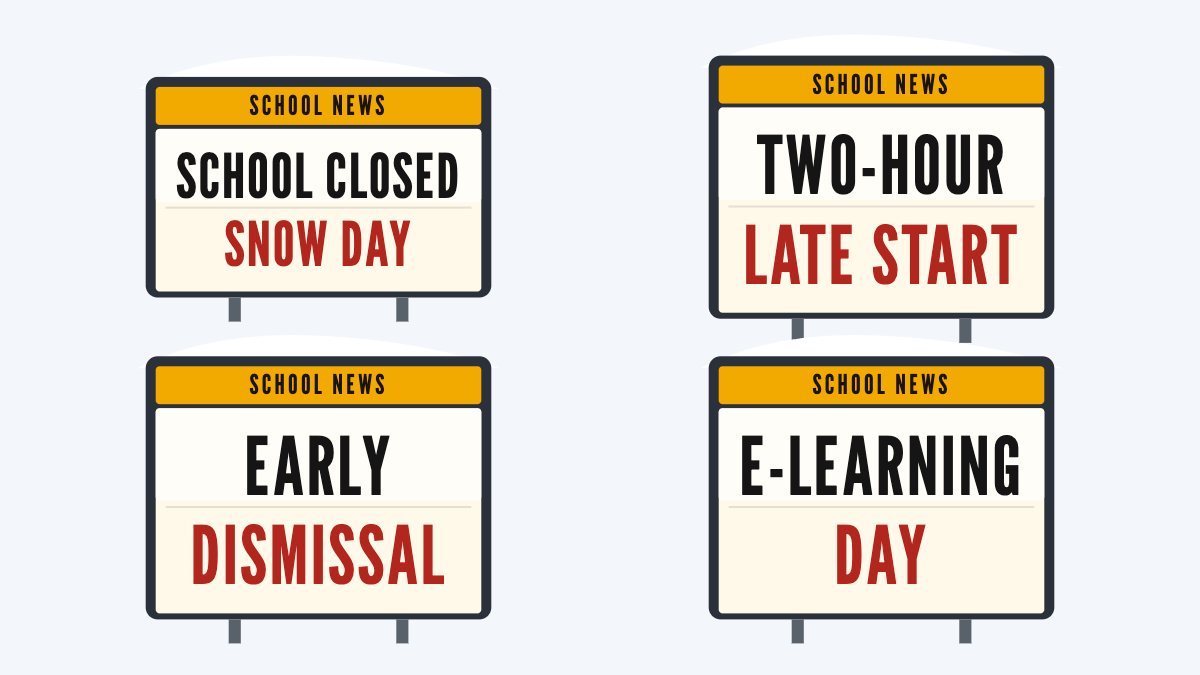
We did not find Agency of Education guidance on remote snow days either. So if your district announces a remote day, ask it how that day counts toward the 175. Our guide to snow days, delays and e-learning days explains the terms.
Where does Vermont get the most snow?
Mount Mansfield, about 3,950 feet up, has the highest normal of Vermont’s 31 NOAA weather stations: 234.9 inches a year. Sutton (141.7), Jeffersonville (139.3) and West Wardsboro (130.2) follow.
Normal snowfall a year and normal December to February low at each of the 31 weather stations in Vermont with a snowfall normal in NOAA's U.S. Climate Normals for 1991–2020, with each station's location, elevation and how complete its record is.
The 10 snowiest and 5 least snowy of 31 stations in Vermont
| Station | Normal snowfall | Dec–Feb low | Elevation |
|---|---|---|---|
| Mount Mansfield | 234.9 in. | 9°F | 3,950 ft |
| Sutton | 141.7 in. | 8°F | 1,500 ft |
| Jeffersonville | 139.3 in. | — | 1,163 ft |
| West Wardsboro | 130.2 in. | — | 1,410 ft |
| Worcester 2 W | 125.6 in. | 12°F | 1,360 ft |
| Brookfield 2 Sw | 124.2 in. | — | 1,300 ft |
| Waitsfield 2 W | 117.7 in. | — | 1,028 ft |
| Island Pond | 114.9 in. | 7°F | 1,200 ft |
| Sutton 2NE | 113.6 in. | 2°F | 1,000 ft |
| S Lincoln | 112.5 in. | 9°F | 1,341 ft |
| … | |||
| Salisbury 2 N | 72.7 in. | 12°F | 420 ft |
| Gilman | 67.7 in. | — | 840 ft |
| South Newbury | 65.7 in. | — | 470 ft |
| Cornwall | 58.6 in. | 12°F | 345 ft |
| S Hero | 50.1 in. | 15°F | 110 ft |
Download “Normal snowfall at Vermont weather stations, 1991–2020” (CSV, opens in Excel)
Built from: U.S. Climate Normals, 1991–2020 (National Centers for Environmental Information).
All 4 sit at our rule’s ceiling of 15 inches, which it reaches at about 129 inches of snow a year. Even the least snowy station, South Hero, normally gets 50.1 inches, enough for a closing point of about 7.5.
Of the 31 stations, 5 are what NOAA calls standard, with 24 or more years of records, and 26 are provisional, with at least 10. The normals cover 1991 to 2020.
How cold does it have to be to close school in Vermont?
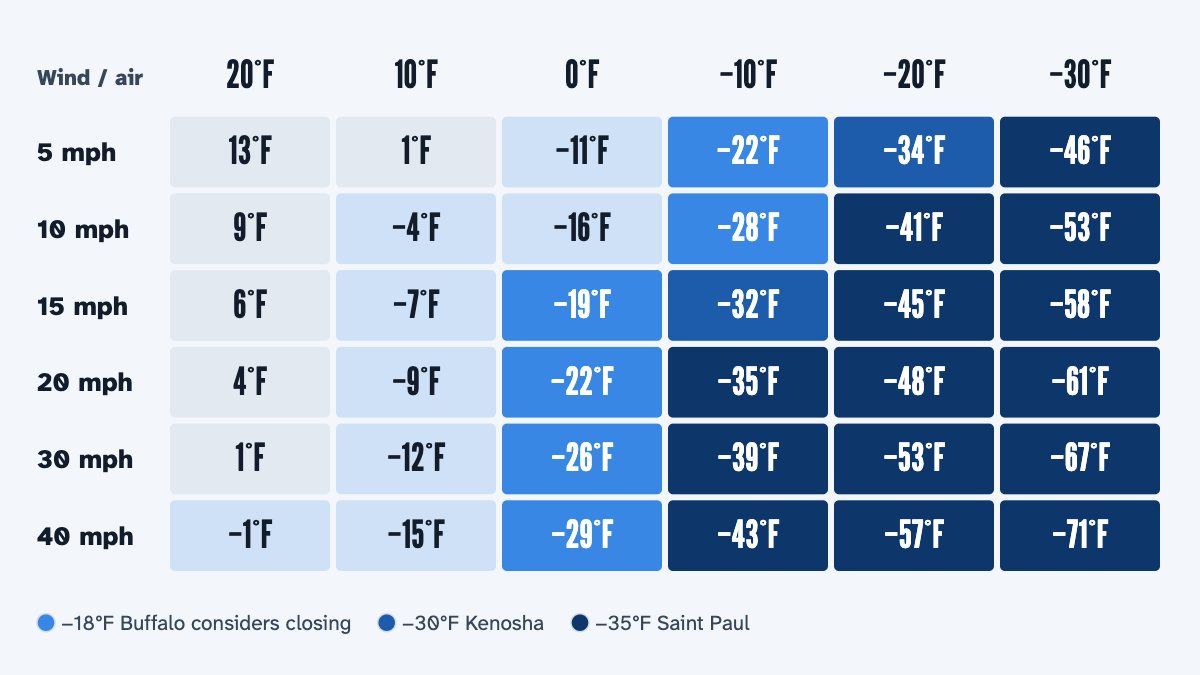
Vermont’s school-year law sets no temperature, so the calculator uses our cold point: a wind chill of −30°F to −35°F in the map’s cities, by our rule of thumb. It is the normal December-to-February low minus 45°F. Districts that publish a cold number are in our guide to cold-weather closings.
Barre’s normal winter low is 9.7°F, so its cold point is −35°F. Rutland, at 11.2°F, sits at −34°F, and Burlington, at 15.2°F, at −30°F. The calculator checks the wind chill from 5 to 9 AM.
At those numbers, minutes matter. The Weather Service’s wind chill chart shades frostbite times of 30, 10 and 5 minutes, and the Service asks adults to “be even more cautious with children,” the elderly and people in poor health.
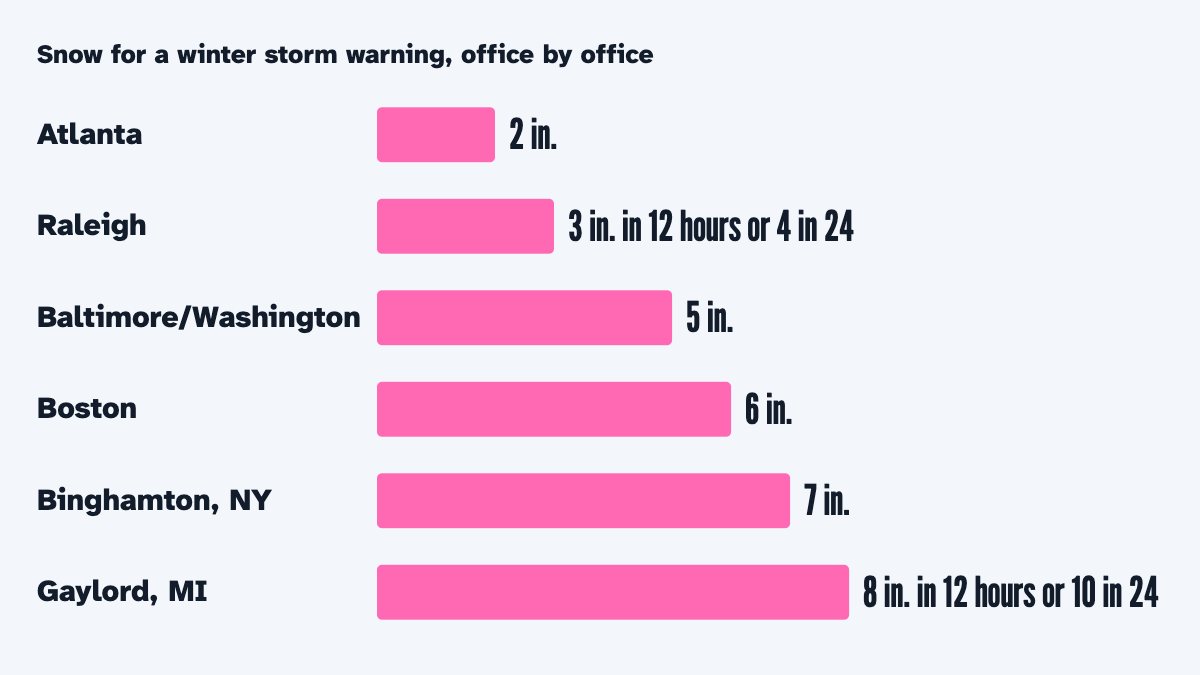
The Weather Service sets its cold alert criteria locally, office by office, so a warning reflects what counts as dangerous cold where you live. An Extreme Cold Warning, the name that replaced the Wind Chill Warning on or about October 1, 2024, raises the calculator’s chance more than a watch or a Cold Weather Advisory.
Who decides, and when do families hear?
Your school board closes a school, and the State Board of Education decides waiver petitions. Area superintendents set regional calendars before April 1 each year.
Because a waiver petition is due within 10 days of a closing, a district’s request follows soon after a storm. For the closing itself, check your district’s website, app, or local TV and radio. Our guide to how schools decide snow days explains what goes into the call.
The calculator gives you a chance the night before: 3 chances, for a snow day, a late start and school as usual, that add up to 100%. It reads the National Weather Service forecast for the part of your ZIP code where most people live and shows its reasons. Forecasts change, so look again in the morning.
Snow days in Vermont
- Snow
- 10.5 inches in Burlington and Rutland
- 12 in Barre
- Cold
- Our cold point −30°F to −35°F
- Extreme Cold Warning
- School year
- 175 attendance days
- A majority must attend
- Waivers
- Petition within 10 days
- By June 15
- Granted if the Board does not act
- Remote days
- Not in § 1071
- Not in State Board rules
- Who decides
- School board
- State Board for waivers
Questions people ask
How many school days does Vermont require?
At least 175 student attendance days a year, plus at least 5 teacher in-service days. State law sets no yearly hours minimum.
Does Vermont forgive snow days?
It can. A school board petitions the State Board within 10 days of the closing and by June 15. If the State Board fails to act on the petition at its meeting, the waiver is granted.
Can Vermont schools have remote snow days?
The state law and State Board rules we read do not provide for remote days in place of a weather closure. Ask your district how it counts one.
Does a snowy day with low attendance count in Vermont?
Only if a majority of enrolled students are recorded as in attendance. A day when most students stay home does not count toward the 175.
Does the calculator show late starts in Vermont?
Yes. Next to the chance of a snow day, it shows the chance of a late start and of school as usual. Whether your district uses delays at all is its own choice, so check how it has handled past storms.
Sources: 16 V.S.A. § 1071 (Vermont Legislature); State Board of Education Rules Series 2000; National Weather Service, cold alerts.
Facts checked October 29, 2026.
More guides
-
-
-
-
-
-