Ohio Snow Day Calculator: Chances, Hours Rule and No Calamity Days
By our rule of thumb, about 4 inches closes schools in Cincinnati and Dayton, 9.5 in Cleveland. Ohio counts hours, not days: no calamity days, and only hours below the minimum are made up.

- Under 5%
- 5 to 24%
- 25 to 49%
- 50 to 74%
- 75% or more
The next school day in Ohio
Worked out from the National Weather Service forecast, 3:07 PM EDT, Thursday.
- Columbus<1% snow dayFriday: no snow
- Cleveland<1% snow dayFriday: no snow
- Cincinnati<1% snow dayFriday: no snow
- Toledo<1% snow dayFriday: no snow
- Akron<1% snow dayFriday: no snow
- Dayton<1% snow dayFriday: no snow
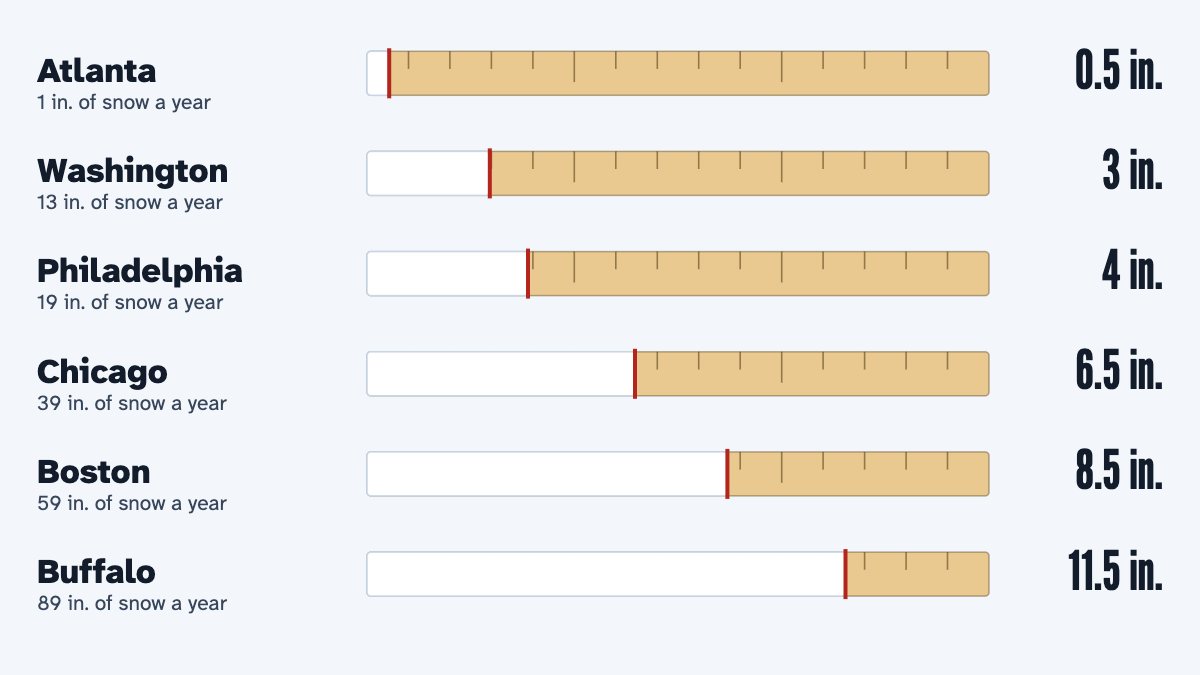
Ohio’s snow piles up in the northeast. Cleveland averages about 65 inches a year, and by our rule of thumb its schools close about half the time once 9.5 inches falls overnight. Cincinnati and Dayton get about 19 to 20 inches and close at about 4. Columbus, at 24 inches, sits at 4.5, Toledo at 6 and Akron at 7.5.
So the same storm reads very differently across the state. By the calculator’s rules, 6 inches overnight with no warning out gives Dayton about a three-in-four chance of a snow day, and Cleveland about one in five. That is why it reads the National Weather Service forecast for the part of your ZIP code where most people live and weighs it against your own area’s normal snowfall, not a statewide average.
The school year bends rather than breaks. Ohio counts hours, not days: state law sets 910 a year for grades 1 to 6 and 1,001 for grades 7 to 12. There are no calamity days any more, and hours lost above a school’s minimum do not have to be made up.
How much snow closes school in Ohio?
By our rule of thumb, about 4 inches overnight in Cincinnati and Dayton, 4.5 in Columbus, 6 in Toledo, 7.5 in Akron and 9.5 in Cleveland. Each is the snowfall at which schools there close about half the time, worked out from the city’s normal yearly snowfall.
Ohio's six largest cities: normal snowfall a year (NOAA 1991–2020) and the snowfall and wind chill at which, by our rule of thumb, schools there usually close.
| City | Normal snowfall | Usually closes at | Cold point (wind chill) |
|---|---|---|---|
| Columbus | 24 in. a year | 4.5 in. of snow | −21°F |
| Cleveland | 64.7 in. a year | 9.5 in. of snow | −20°F |
| Cincinnati | 18.5 in. a year | 4 in. of snow | −20°F |
| Toledo | 35 in. a year | 6 in. of snow | −23°F |
| Akron | 46.1 in. a year | 7.5 in. of snow | −23°F |
| Dayton | 19.8 in. a year | 4 in. of snow | −22°F |
Our rule of thumb: the usual closing point is 0.5 × (normal snowfall a year)0.7, the cold point the normal December–February low minus 45°F. How the calculator works.
Cleveland gets three and a half times Cincinnati’s snow, but its closing point is less than two and a half times higher: the rule grows with snowfall, only more slowly. If your district rarely closes, or closes easily, say so and the calculator moves its point. For the whole country, see our guide to how much snow closes school.
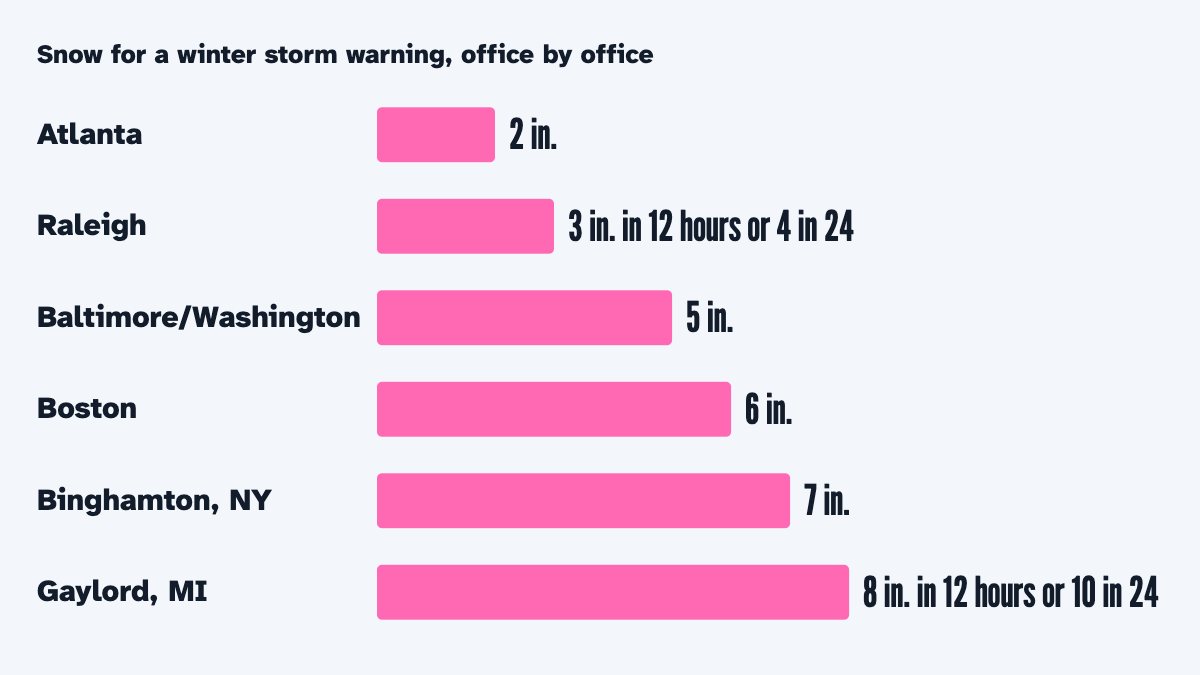
When the snow falls counts as much as how much. The calculator counts overnight snow and snow during the morning bus run in full, 80% of what falls the afternoon and evening before, and 45% of what falls once school has started, when an early dismissal is the likelier result. Snow that falls with the air above freezing counts less, since it melts on the roads, and gusts of 25 mph or more while an inch or more comes down make it count more. A Weather Service warning raises the chance more than a watch or an advisory.
Where does Ohio get the most snow?
In the northeast, led by the snow belt east of Cleveland. NOAA has snowfall normals for 93 Ohio stations, with a middle value of 23.3 inches a year, and the snowiest by far is Chardon at 113.7 inches. Next come Dorset (89.9), Youngstown’s airport (67.8), Brunswick (65.4) and Cleveland (63.8).
Normal snowfall a year and normal December to February low at each of the 93 weather stations in Ohio with a snowfall normal in NOAA's U.S. Climate Normals for 1991–2020, with each station's location, elevation and how complete its record is.
The 10 snowiest and 5 least snowy of 93 stations in Ohio
| Station | Normal snowfall | Dec–Feb low | Elevation |
|---|---|---|---|
| Chardon | 113.7 in. | 19°F | 1,130 ft |
| Dorset | 89.9 in. | 19°F | 980 ft |
| Youngstown Regional Airport | 67.8 in. | 22°F | 1,180 ft |
| Brunswick 0.5 Ne | 65.4 in. | — | 1,122 ft |
| Cleveland | 63.8 in. | 25°F | 763 ft |
| Hiram | 62.9 in. | 18°F | 1,230 ft |
| Mansfield Lahm Municipal Airport | 49.2 in. | 22°F | 1,295 ft |
| Akron Canton Regional Airport | 47.2 in. | 23°F | 1,208 ft |
| Oberlin | 47 in. | 21°F | 816 ft |
| Ravenna 2 S | 45 in. | 19°F | 1,107 ft |
| … | |||
| St Marys 3 W | 10.4 in. | — | 874 ft |
| Middletown | 9.7 in. | — | 646 ft |
| Roseville | 9.5 in. | — | 740 ft |
| Belleville L&d | 8.5 in. | — | 604 ft |
| S Pt | 6.2 in. | 27°F | 553 ft |
Download “Normal snowfall at Ohio weather stations, 1991–2020” (CSV, opens in Excel)
Built from: U.S. Climate Normals, 1991–2020 (National Centers for Environmental Information).
The least snowy is South Point on the Ohio River (6.2 inches), then Belleville’s locks and dam (8.5), Roseville (9.5) and Middletown (9.7). A school in Chardon and one near the Ohio River live through different winters, and the calculator treats them that way.
Do snow days have to be made up in Ohio?
Only the hours that drop a school below its minimum. Ohio switched from counting days to counting hours in 2014, and section 3313.48 of the Revised Code now sets 455 hours for half-day kindergarten, 910 for all-day kindergarten and grades 1 to 6, and 1,001 for grades 7 to 12. Up to two days of parent-teacher conferences, two days of teacher meetings and recess may count toward them. That section has been in force in its current form since October 24, 2024.
The Department of Education and Workforce is blunt: “there are no longer calamity days in Ohio schools.” Instead, schools schedule extra hours above the minimum, and hours missed above it do not have to be made up. If closings push a school below the minimum, it must make up the hours by extending its school year. The department’s guidance was last updated in September 2025.
The department’s own example shows the math. A high school scheduled for exactly 1,001 hours that loses 32 hours must make all 32 up; one scheduled for 1,040 hours does not. So the number that matters is your district’s cushion, its scheduled hours minus the state minimum, and the state sets no count of free days. Ask your district how many extra hours its calendar holds.
Can Ohio schools teach online instead?
Yes, but in Ohio online lessons make up lost hours rather than keep a closed day open. Under section 3313.482, in force in its current form since October 3, 2023, a school’s board may adopt a plan by August 1 to teach online and make up hours lost to a closing for hazardous weather or another emergency, up to “the equivalent of three school days.”
The plan needs the written consent of the teachers’ union, and it must cover attendance, access for students with disabilities, notice to families and how teachers stay in touch, with live teaching where possible. Plans stay local: the department says schools do not send them to the state. Online-only schools and blended-model schools cannot use this route.
How cold does it have to be to close school in Ohio?
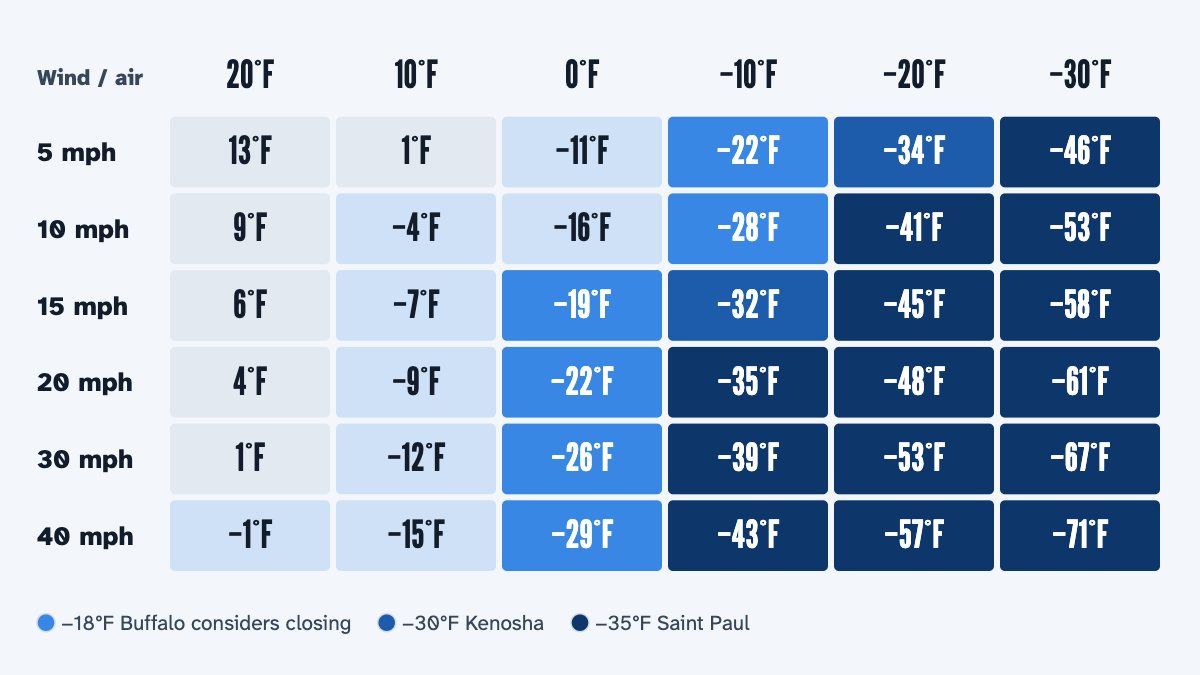
Ohio law sets no temperature, and the Columbus City Schools page we read gives no number either, so each district decides. By our rule of thumb, schools start closing for cold at a morning wind chill of about −20°F in Cleveland and Cincinnati, −21°F in Columbus, −22°F in Dayton, and −23°F in Toledo and Akron: 45 degrees below each city’s normal December-to-February low.
The calculator reads the forecast wind chill from 5 to 9 AM, when students wait for buses or walk to school. It also watches for an Extreme Cold Warning, the Weather Service’s alert for extremely dangerous cold, which replaced the Wind Chill Warning in October 2024. A warning in force adds to the chance; a Cold Weather Advisory adds less.
Who decides, and when do Ohio families hear?
Your district does. The local board sets the calendar, after a public hearing held at least 30 days before it adopts it, under section 3313.48, and the superintendent makes the weather call.
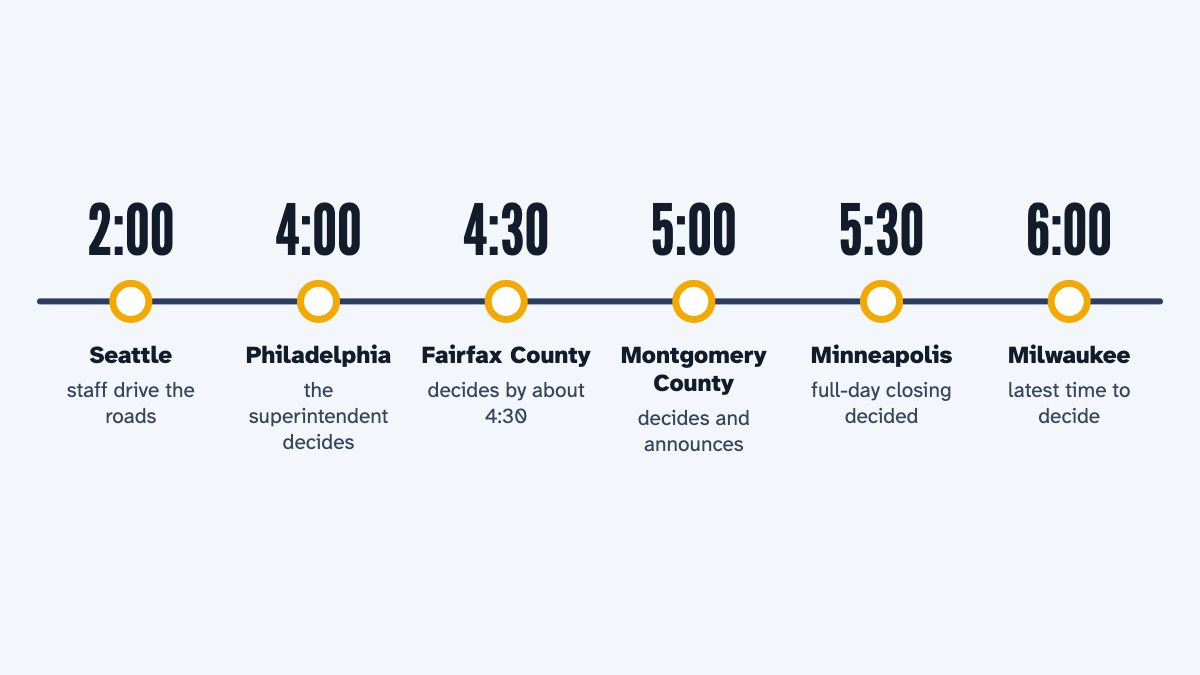
Columbus City Schools announces the night before whenever it can; otherwise the superintendent and the operations team decide no later than 5:30 a.m. If bad weather is due in the afternoon, the district may dismiss as early as noon, and an early dismissal cancels after-school activities.
Elsewhere, check your own district’s website, app or local TV and radio. The calculator gives odds from the forecast; the call is your district’s.
So what are the odds of a snow day in Ohio tomorrow?
They depend on your ZIP code: put it in the box at the top of this page. Here is what moves the odds in Ohio.
Snow days in Ohio
- Snow that closes schools
- Cincinnati, Dayton 4 in
- Columbus 4.5 in
- Cleveland 9.5 in
- The school year
- Hours, not days
- 910 or 1,001 hours
- no calamity days
- Making up time
- Only below the minimum
- extend the year
- online plan up to 3 days’ hours
- Cold
- No state number
- our points −20°F to −23°F
- Who decides
- Local board and superintendent
- Columbus by 5:30 a.m.
Questions people ask
How many calamity days does Ohio have?
None. The state’s Department of Education and Workforce says there are no calamity days now that Ohio counts hours instead of days. A district’s room for closings is the hours it scheduled above the minimum.
How many snow days are Ohio schools allowed?
The state sets no number. A school can close until its scheduled hours fall to the minimum, 910 for grades 1 to 6 and 1,001 for grades 7 to 12, without making anything up. After that it extends the year, and a board-adopted online plan can cover up to three days’ worth of hours.
Can Ohio schools hold online classes on a snow day?
Ohio’s law offers an online plan, adopted by the school board with the teachers’ union’s written consent, to make up as much as three days’ worth of hours lost to closings. We found no other state route for remote days, so ask your district whether it has a plan and when it uses it.
What time does Columbus City Schools announce a closing?
The night before when it can, and otherwise by 5:30 a.m. on the school day.
How cold does it have to be to cancel school in Ohio?
There is no statewide temperature; each district decides. By our rule of thumb, Ohio schools start closing for cold at a morning wind chill between about −20°F and −23°F, depending on the city.
Sources: Ohio Revised Code section 3313.48; Ohio Department of Education and Workforce, school schedules; Ohio Revised Code section 3313.482.
Facts checked October 29, 2026.
More guides
-
-
-
-

-
-