How Schools Decide Snow Days: Who Makes the Call, When and Why
The superintendent decides, most often between 4:30 and 6 AM, after staff drive the roads from as early as 2 AM. Roads, timing, buses, cold, buildings and the forecast all count.

The superintendent makes the call, usually in the dark. On a snowy night, district staff drive the bus routes from as early as 2 AM and report what they find, and the decision comes before the first buses leave: by about 4:30 AM in Fairfax County, Virginia, by 5:30 in Minneapolis, and by 6 at the latest in Milwaukee.
What they weigh is much the same from district to district: the roads, the sidewalks and parking lots, when the snow or ice will fall, the hilliest bus routes, the cold at bus-stop time, heat and power in the buildings, whether staff can get in, and how sure the forecast is. A study of Maryland’s school districts found the process “remarkably similar” in districts of every size and place.
The choices are a full closing, a two-hour delay, an early dismissal or, in some districts, a remote day. Our snow day calculator reads the same National Weather Service forecast for your ZIP code and gives the chance of a snow day, a late start or school as usual. Only your district decides, and its website, app and local TV and radio carry the answer.
Who decides if school is closed for snow?
The superintendent, in district after district: Fairfax, Philadelphia, Denver and Pittsburgh all say so on their own pages. But the superintendent rarely decides alone. In Philadelphia, staff start watching a storm 24 to 48 hours ahead, and the call follows a recommendation from the deputy superintendent of operations.
Many districts lean on a small storm team. Minneapolis holds a severe weather meeting of its transportation, operations and communications staff, among others, and in Anchorage staff gather weather and road reports and advise the superintendent. Outside voices count too: city emergency managers, police, highway crews, bus companies, the National Weather Service and the superintendents next door.
The people behind the call are seasoned weather watchers. The Maryland study found that school transportation directors read forecasts at a high level, though they have little formal training in weather.
In the biggest cities, the mayor may make the announcement. New York City’s switch to remote classes on January 26, 2026, was announced by Mayor Mamdani and Schools Chancellor Samuels, and Boston’s closing on February 24, 2026, came in a storm update from Mayor Wu. Charter and private schools make their own calls, New York’s announcement notes.
What happens on a snow morning, hour by hour?
Most of it happens while you sleep. Road checks start between about 2 and 5 AM, and most decisions land between 4:30 and 6 AM. Here is one snow morning, pieced together from districts’ own pages:
- Seattle Public Schools staff start driving the roads; they report at 3 AM and aim to decide by 5. (Seattle's own page)
- Baltimore County's transportation staff begin checking roads, bus stops and problem spots, as early as 2:30 AM. (Baltimore County's own page)
- Philadelphia's superintendent makes the call, and the district announces it by 4:45 AM. (Philadelphia's own page)
- Fairfax County, Virginia, decides by about 4:30 AM when it could not decide the evening before. (Fairfax County's own page)
- Montgomery County, Maryland, makes and announces its morning decision by 5 AM; Atlanta decides by 5 too. (Montgomery County's own page)
- Minneapolis decides on a full-day closing no later than 5:30 AM; so do Baltimore County, Nashville and Columbus. (Minneapolis's own page)
- Milwaukee's latest time to decide on a closing is 6 AM. (Milwaukee's own page)
The earliest drivers we found are in Seattle, where staff drive set routes at about 2 AM and report at 3. Its page warns that downtown can be clear while side streets, hills and outlying areas are still icy. Baltimore County starts as early as 2:30 AM, Gwinnett County, Georgia, at 3:30 or 4, and Anoka-Hennepin, Minnesota, between 4 and 5.
Philadelphia publishes the tightest clock: a team call at 3:45 AM, the superintendent’s decision by 4:00, a confirmation at 4:30 and the announcement by 4:45. Montgomery County, Maryland, gets a Weather Service update by 4:30 and announces its morning decision by 5.
Then the deadlines fall. The one named most often, by about ten of the districts we read, is 5:30 AM. The latest is 6 AM, in Milwaukee, Fargo and Gwinnett County.
School news
What do superintendents check before closing school?
Whether everyone can get to school and home again safely, and whether the buildings are ready for them. These are the checks districts name most often on their own pages:
- Roads. Staff drive them and talk to police and highway crews; Denver even checks the city’s plowing schedules.
- Sidewalks, bus loops and parking lots. Baltimore County says these matter even when the main roads are clear, and Fairfax sends staff to inspect its lots and bus lanes.
- Timing. Minneapolis asks whether the storm comes overnight or during school, and Des Moines, in a 2018 letter, whether crews would have time to clear roads after the snow stops.
- The worst bus routes. Fulton County, Georgia, warns that one clear street says little about the rest of the county, and Jeffco in Colorado lists its mountain schools as a group of their own.
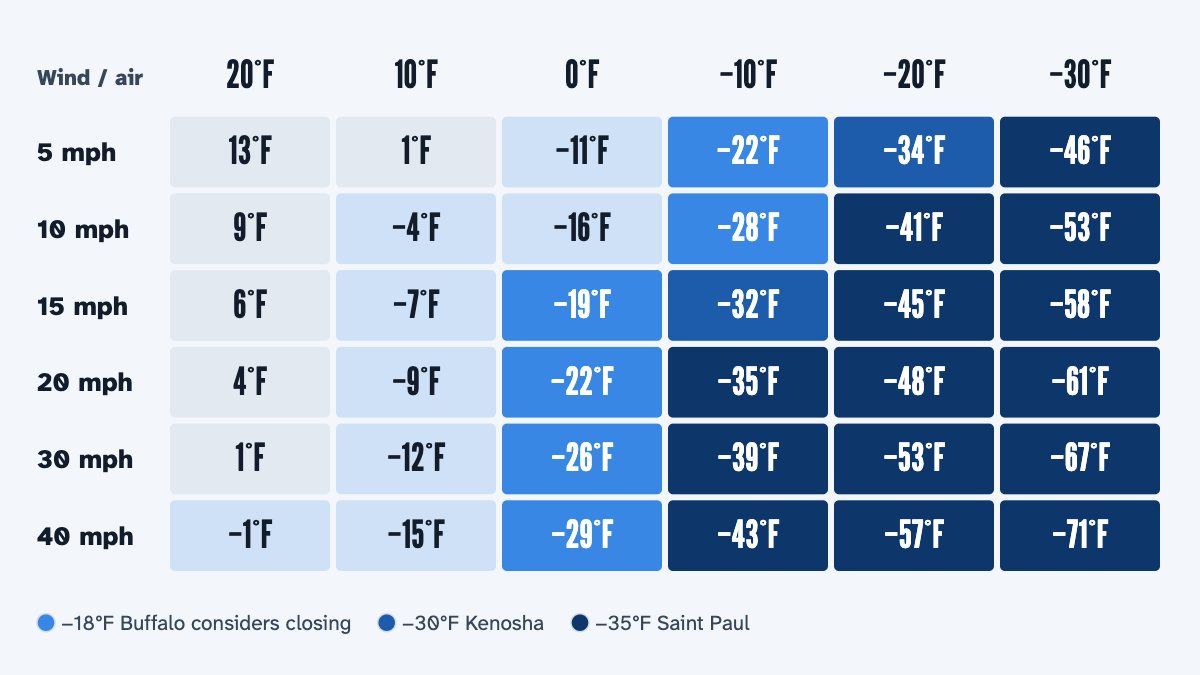
- Cold at bus-stop time. Saint Paul calls off in-person school when the 6 AM wind chill forecast is −35°F or colder. More in our guide to cold weather closings.
- Heat and power. Chicago lists heating or power problems, and Dallas asks gas and utility companies whether there is enough energy to heat its buildings.
- Staff travel. When Philadelphia switched to a virtual day in February 2026, it named staff who commute in from across the region.
- How sure the forecast is. Fairfax tries to decide the evening before, but waits when the forecast is uncertain.
- The neighbors. Minneapolis, Baltimore County, Cedar Rapids and Green Bay all compare notes with nearby districts.
- Families. Jeffco asks whether school meals can be served, and Anchorage weighs child care, state testing dates and how many snow days it has left.
Weather still decides most of it. In the Maryland study, factors other than weather played almost no role, though Fridays were slightly more likely to close. Jeffco explains why it stays open when it can: a closing scrambles the plans of 66,500 students’ families and 14,000 employees, and when it asks whether to close, “Most often, the answer is no.”
Why do schools wait until morning to decide?
Because forecasts change overnight, and a district would rather decide once than twice. Urbandale, Iowa, says it prefers “a single decision” to a night-before call it might have to reverse. Kenosha’s policy notes that advance warnings are often canceled when a storm system changes, and Milwaukee says a shift in a storm’s track can mean many inches of snow or just light snow or rain.
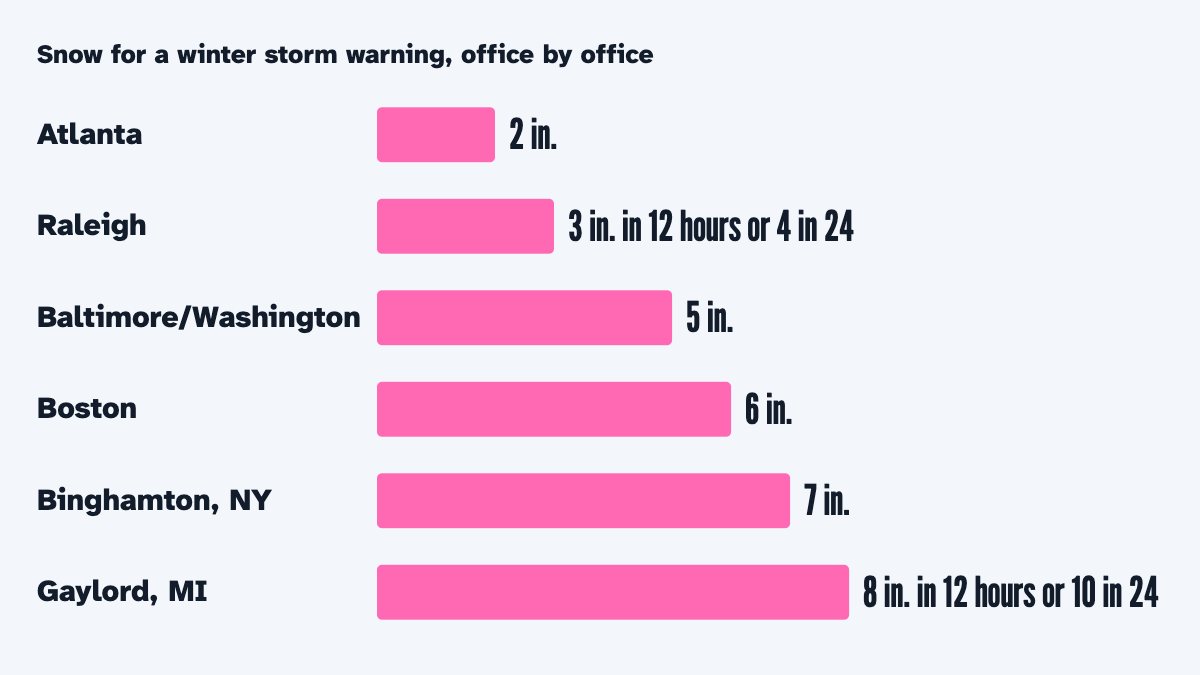
The Weather Service’s own record shows why. Its Baltimore/Washington office says its warnings for 5 inches or more come with an average lead time approaching 24 hours. Yet about 1 in 3 of its warnings are false alarms, many of them storms that brought real snow, just less than the warning level.
Some districts do decide the night before, when the storm is clear enough. Montgomery County makes evening decisions by 7 PM, Philadelphia announces by 9 PM, Madison decides by 9 PM, and Pittsburgh tries for 10 PM, though its page says that in most cases the decision waits until morning. Milwaukee decides the night before only when severe weather is already underway or close to certain.
Overnight roads are often the problem. Gwinnett County says that, because of overnight road conditions, it is more likely to cancel school early in the morning than to let students out early.
Snow day, two-hour delay, early dismissal or remote day: what is the difference?
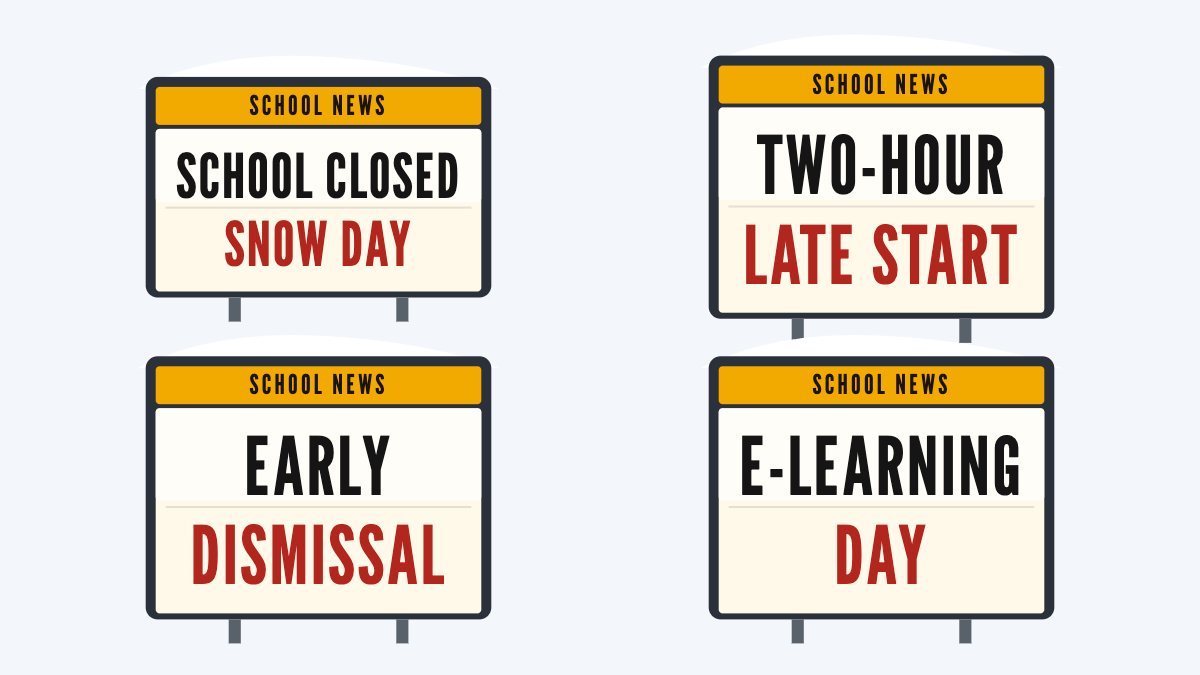
A snow day closes school for the day, a two-hour delay starts it two hours late, an early dismissal sends students home before the roads turn bad, and a remote day closes the buildings while classes go on online. In Fairfax County, a two-hour delay turns a 7:10 AM bus pickup into 9:10.
Not every district has all four. Saint Paul calls late starts and early dismissals “not logistically possible,” and Anoka-Hennepin says it has no late-start option. Jeffco uses its two-hour delay only for extreme weather.
Early dismissals are decided by late morning. Montgomery County decides on early release by 10:30 AM when the trip home looks risky, Seattle by 11 AM, and Columbus, Ohio, can send students home as early as noon, which also cancels after-school activities.
Remote days depend on the district. Pittsburgh keeps its first two weather closings as snow days and then switches to remote teaching days, and New York City kept classes going online on January 26, 2026, partly to meet the state’s 180-day requirement. Minneapolis allows e-learning only after two or three canceled days, Saint Paul’s first two weather days have none, and Chicago said there would be no remote learning when it closed for cold on January 23, 2026.
A closing usually covers the whole district. Fairfax explains that its buses and teachers cross the county, so it does not close only part of it, and Montgomery County’s weather closings always cover the entire school system. How much snow it takes is a question of its own: see how much snow closes school.
How do families find out about a snow day?
From the district first: its website, app, texts, emails and calls, then local TV and radio. Many districts announce only changes. Anchorage puts it plainly: “The absence of a notice indicates there are no delays or closures.” Atlanta, Nashville and Pittsburgh say the same.
Messages take time to reach everyone. Appleton, Wisconsin, sends emails from 5:00 AM, texts from 5:30 and phone calls at 5:45, because it has more than 10,000 calls to make. Anchorage does not robocall a district-wide closing at all, since the morning is too short for thousands of calls, and Fairfax warns that its emails will likely arrive after its website changes.
If school is open and you are worried about the trip, call the school. Green Bay excuses the absence when a parent calls, and Fargo says parents may keep children home. Our calculator gives the chance the night before, with its reasons, so you can plan lunches and rides. The decision itself belongs to your district.
The whole night, on one map:
How schools decide snow days
- Who
- Superintendent
- Storm team
- Police and road crews
- Weather Service
- When
- Road checks from 2 AM
- Decisions 4:30 to 6 AM
- Night before if certain
- What they check
- Roads and sidewalks
- Storm timing
- Bus routes and hills
- Cold at bus time
- Also weighed
- Heat and power
- Staff travel
- Forecast doubt
- Neighbor districts
- Choices
- Close
- Two-hour delay
- Early dismissal
- Remote day
- How you hear
- District site and app
- Texts and calls
- Local TV and radio
- Silence means open
Questions people ask
What time do schools announce snow days?
Most districts we read announce between 4:30 and 6 AM, and 5:30 AM is the deadline named most often. When a storm is certain, some decide the evening before, between about 7 and 10 PM.
Why did my school stay open when the next district closed?
Each district has its own roads, routes and resources. A 2018 letter from the Des Moines superintendent listed what makes districts differ: miles of rural or city bus routes, how many students walk, working with city buses, and school meals. Even neighbors who compare notes decide separately.
If there is no announcement, is school open?
In many districts, yes: Atlanta, Nashville and Anchorage are among those that say no announcement means a normal day. Check your own district’s page to be sure.
Can parents keep a child home when school stays open?
Several districts say yes. Green Bay excuses the absence when a parent calls, Fargo says parents may keep children home, and Anoka-Hennepin excuses it when the Weather Service has an extreme cold warning, watch or advisory out and the parent calls before school.
Who decides snow days in New York City?
In January 2026 the call came from the mayor and the schools chancellor together: Mayor Mamdani and Chancellor Samuels announced that public school buildings would close on January 26 while classes went on remotely. Charter and private schools decide for themselves.
Sources: School District of Philadelphia, Inclement Weather Policy; Fairfax County Public Schools, Weather Cancellation Procedures; Call and Coleman, “The decision process behind inclement-weather school closings: a case-study in Maryland, USA,” Meteorological Applications.
Facts checked October 29, 2026.
More guides
-
-
-
-
-