Snow Day Superstitions: The Rituals and What Really Closes School
Pajamas inside out, a spoon under the pillow, ice cubes down the toilet: fun rituals with no known origin that cannot change a forecast. Snow, ice, cold and your district decide.

The night before a storm, kids in snowy places wear their pajamas inside out, sleep with a spoon under the pillow, flush ice cubes down the toilet or put a white crayon in the freezer. It is a fine tradition. It does not change the weather, and nobody knows where it started.
The written record is thin and recent: a 2008 NPR blog post, a 2019 TODAY story and a few first-person accounts collected for a university folklore archive. What really decides tomorrow is the snow, ice and cold around bus time, and a call your district makes before dawn. Below are the rituals, what is known about them, and a tool that shows what the forecast would have to do.
What are the snow day superstitions?
Four rituals turn up again and again, often all on the same night:
- Pajamas inside out. Worn that way to bed, as a teacher described his students doing in a 2008 NPR blog post (news reporting, NPR).
- A spoon under the pillow. The same NPR post pairs it with the pajamas, and a Connecticut student remembered both in the University of Southern California’s Digital Folklore Archives (USC archive).
- Ice cubes down the toilet. Flushed before bed, as a 2019 TODAY story reported (TODAY) and a New Jersey student told the same archive (USC archive).
- A white crayon in the freezer. The TODAY story quoted a Tennessee educator who adds this one.
Some lists run longer. A Spectrum News 1 meteorologist’s 2024 post added brushing your teeth with your other hand, shouting “snow day” into the freezer and eating ice cream the night before (Spectrum News 1). And there is the snow dance, whose beginnings we could not date either.
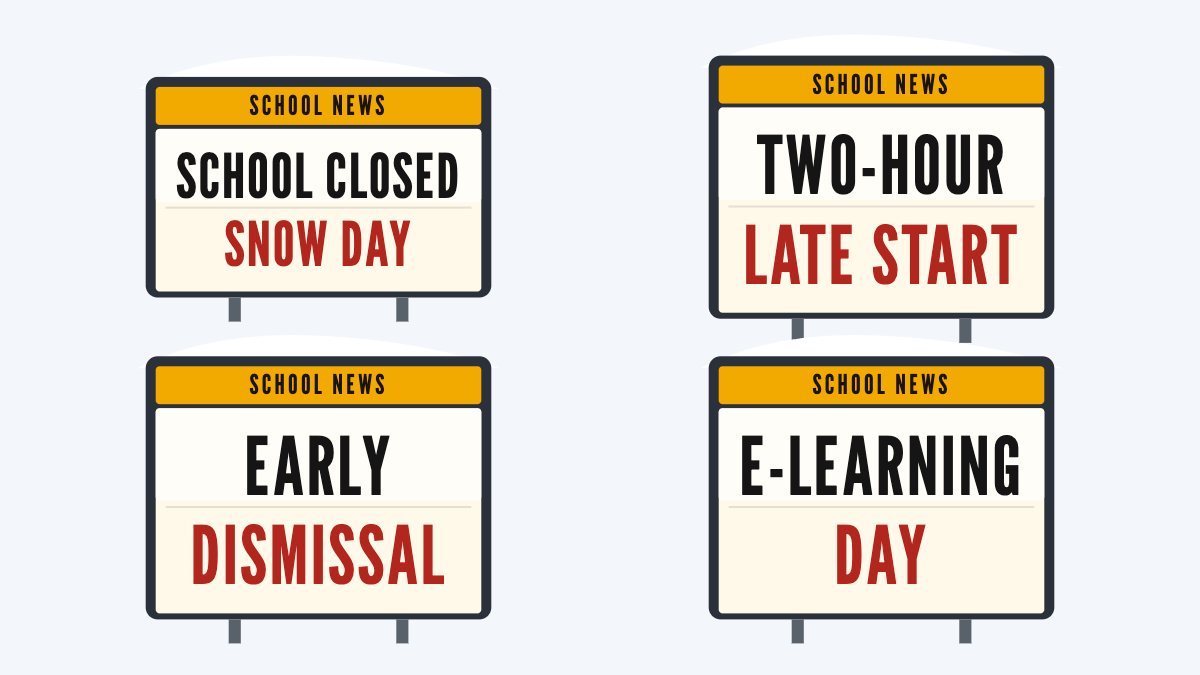
School news
Where did snow day superstitions come from?
Nobody knows. We looked for a dated origin for each ritual and found none. The earliest dated mention we could open is that NPR blog post from January 22, 2008, in which a high school English teacher described the “Pajamas-Inside-Out, Spoon-Under-the-Pillow-Snow-Day Ritual” his students believed could bring a snow day (NPR).
The rituals may be older than that; nothing we found dates them. The TODAY story of February 12, 2019, called their origins murky and said they seem popular on the East Coast and in Canada (TODAY). The students’ accounts in the USC archive describe how the rituals spread, from kid to kid, but not where they began.
You may find explanations online for why a spoon or an ice cube should work. We found no source behind any of them, so we leave them out.
Why do kids keep doing them?
Because other kids do. The Connecticut student learned the spoon ritual from classmates in first or second grade (USC archive). The New Jersey student remembered kids pushing each other to do the rituals before bed, hoping that the more of them who did, the likelier a storm, and the account notes that the rituals pass between friends mainly in cold communities (USC archive).
That is the fun of it: a whole class hoping for the same thing on the same night. Adults play along too. The NPR post passed on a teacher’s account of his students, and the TODAY story quoted an educator with an extra step of their own, the white crayon.
Most kids grow out of it. The Connecticut student stopped by age 8 or 9, after learning how snow days are really decided.
Do snow day superstitions work?
No. A ritual cannot change a forecast, and schools close because of what snow, ice and cold do to roads, sidewalks and bus stops. The Connecticut student put it best: “The weather impacts whether or not it is a snow day” (USC archive).
It really is the weather. A study of how Maryland’s school districts decide found the process remarkably alike from district to district, with factors other than weather playing almost no role; the one small exception was that Fridays were slightly more likely to close (Call and Coleman).
So why does a ritual sometimes seem to work? Our guess is simple: the rituals come out when snow is already possible, so some of those nights end in a snow day anyway, and those mornings make the best stories.
What really decides a snow day?
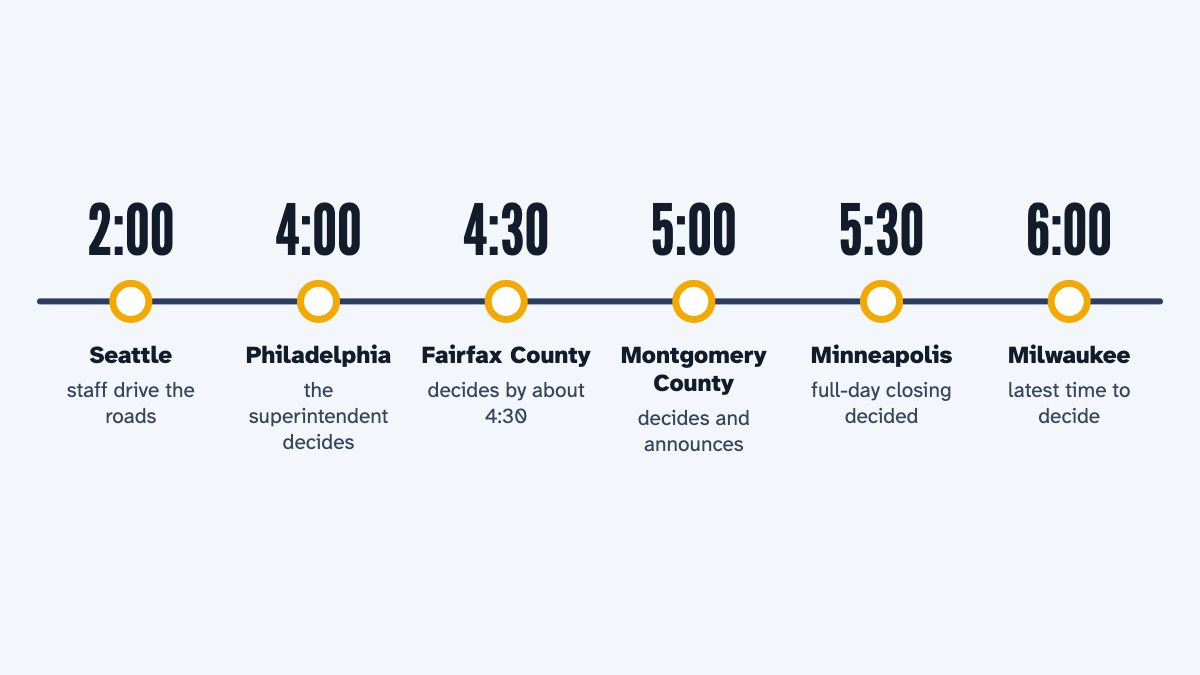
Your district does, usually by 6 AM, after staff check the roads. In Seattle, staff start driving set routes at about 2 AM (Seattle Public Schools), and Milwaukee’s latest time to decide is 6 AM (Milwaukee Public Schools). They look past the main roads: Baltimore County says sidewalks, parking lots and bus loops matter even when the main roads are clear (Baltimore County Public Schools). Our guide to how schools decide has the full picture.
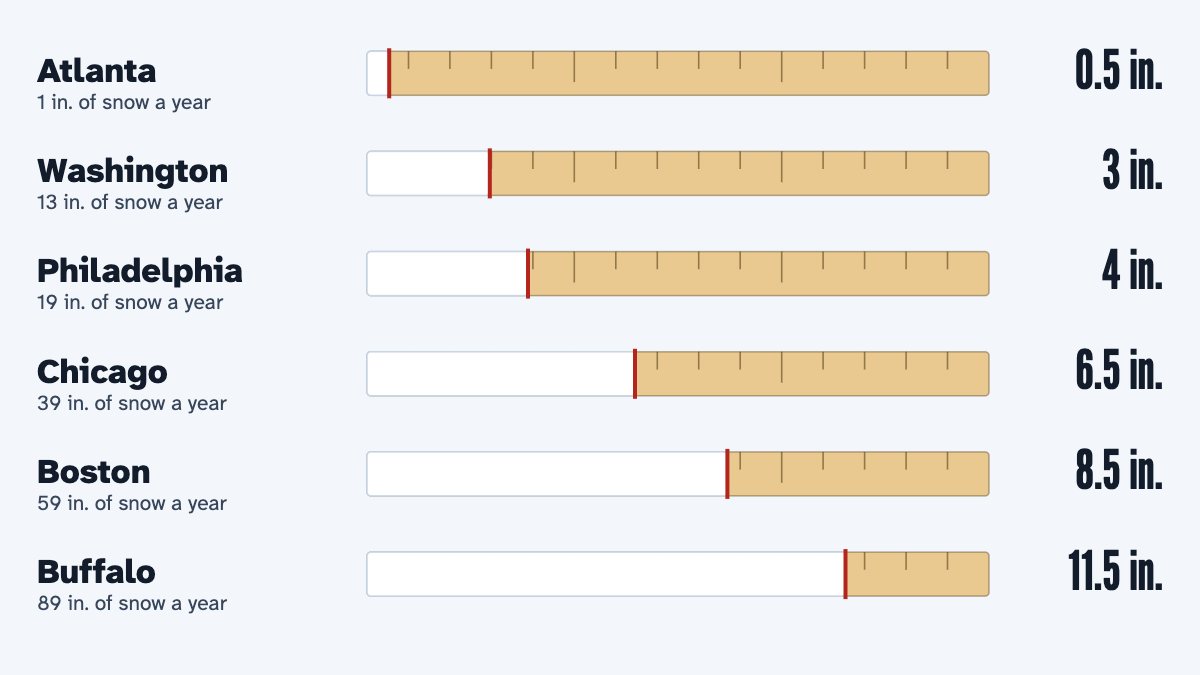
How much snow it takes depends on where you live. By our rule of thumb, schools close about half the time at half an inch in Atlanta, 3 inches in Washington, 6.5 in Chicago, 8 in Minneapolis and 11.5 in Buffalo (see how much snow closes school). By the same rule, about a tenth of an inch of ice closes schools almost anywhere.
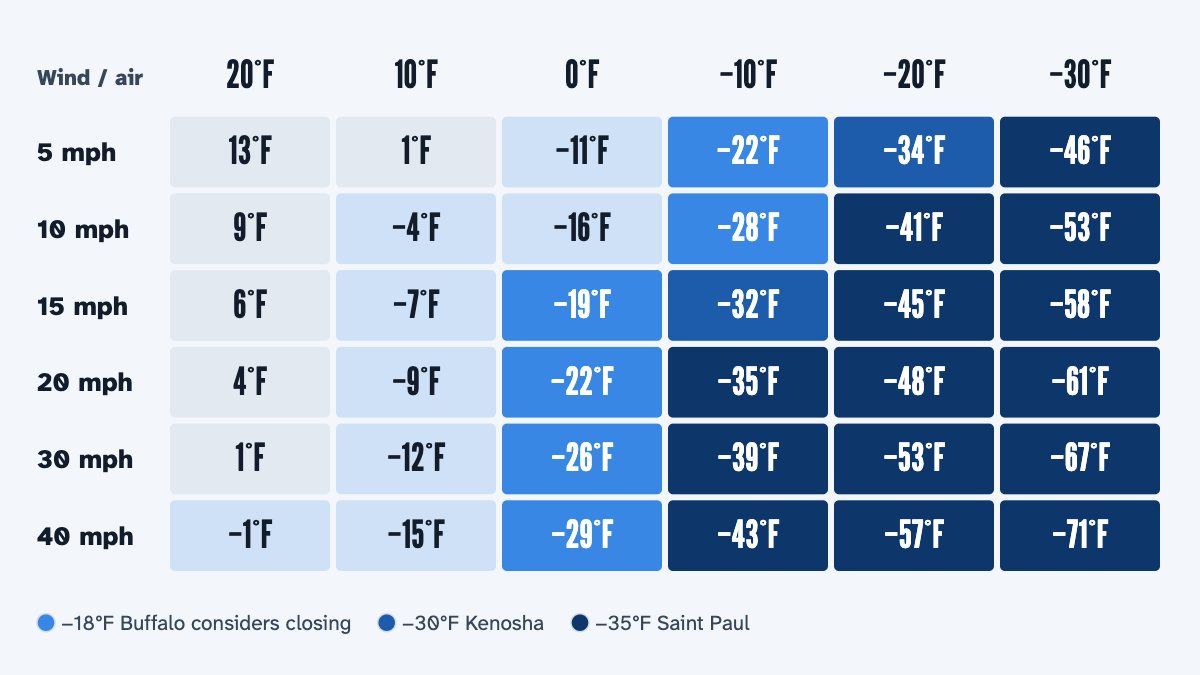
Cold can do it with no snow at all. Saint Paul, Minnesota, calls off in-person school when the wind chill is forecast at −35°F or colder at 6 AM (Saint Paul Public Schools). More in our guide to cold-weather closings.
What would tomorrow’s forecast have to do?
See for yourself. Pick your city below and slide the overnight snow up until a snow day is the likeliest of the three results; that is roughly the storm your rituals are asking for. The tool uses the calculator’s own rules for a plain overnight storm: 25°F, little wind and no Weather Service warning. If your district closes more or less easily than most, the full calculator lets you say so, and moves its closing point.
How much snow would close school here?
Philadelphia, PA (about 19 in. of snow a year), with 4 in. overnight: snow day 52%, late start 43%, school as usual 5%. By our rule of thumb, schools there usually close at about 4 in.
Worked out with the calculator's own rules for a plain storm: the snow falls between 9 PM and 6 AM, it is 25°F with little wind, and no Weather Service warning is out. A real forecast also counts timing, ice, cold and alerts.
A real forecast adds timing, ice, cold and alerts. In our calculator, snow that falls overnight or while buses run counts in full, and snow during the school day counts less than half. For tomorrow, type your ZIP code into the calculator, look for any winter storm watch or warning, and check your district’s website or app in the morning. Then put the spoon under your pillow anyway. It can’t hurt.
Snow day superstitions
- The rituals
- pajamas inside out
- spoon under the pillow
- ice cubes flushed
- white crayon in the freezer
- Where they come from
- no known origin
- earliest dated mention 2008
- passed kid to kid
- Do they work
- no
- it is the weather
- Fridays a bit likelier in one study
- What really decides
- snow and ice by bus time
- cold at the bus stop
- your district, before dawn
Questions people ask
Why do you wear pajamas inside out for a snow day?
Nobody knows; it is a game kids pass to each other. The earliest dated mention we found is a 2008 NPR blog post in which a teacher described students wearing their pajamas inside out and putting spoons under their pillows to bring a snow day (NPR). We found no source for why inside out.
Why put a spoon under your pillow for a snow day?
No one has traced it. It goes with inside-out pajamas in the 2008 NPR post and in students’ accounts in the USC Digital Folklore Archives (USC archive). The explanations you may read online come with no source we could find.
Does flushing ice cubes bring a snow day?
No. It is one of the classic rituals, reported by TODAY in 2019 (TODAY), but no ritual changes a forecast. Snow, ice and cold at bus time, and your district’s call, decide the day.
What is the white crayon snow day trick?
Putting a white crayon in the freezer the night before. The 2019 TODAY story quoted a Tennessee educator who adds it to the spoon, the ice cubes and the inside-out pajamas (TODAY). Like the others, it has no known origin.
What should I check the night before a storm?
The forecast for your ZIP code, any Weather Service watch or warning, and how much snow usually closes schools where you live. Then check your district’s website, app or local TV and radio in the morning: 5:30 AM is the most common deadline districts publish, and some take until 6 (see how schools decide).
Sources: NPR, Blog of the Nation (news reporting, January 22, 2008); TODAY, NBC (news reporting, February 12, 2019); USC Digital Folklore Archives, a student’s account (May 14, 2023).
Facts checked October 29, 2026.
More guides
-
-
-
-
-