Washington, D.C. Snow Day Calculator: Closings, Delays and Make-Up
By our rule of thumb, about 3 inches of snow closes schools in Washington, D.C. For DC Public Schools the Mayor decides, and some snow days, but not delays, are made up at year’s end.

- Under 5%
- 5 to 24%
- 25 to 49%
- 50 to 74%
- 75% or more
The next school day in Washington, D.C.
Worked out from the National Weather Service forecast, 3:07 PM EDT, Thursday.
- Washington<1% snow dayFriday: no snow
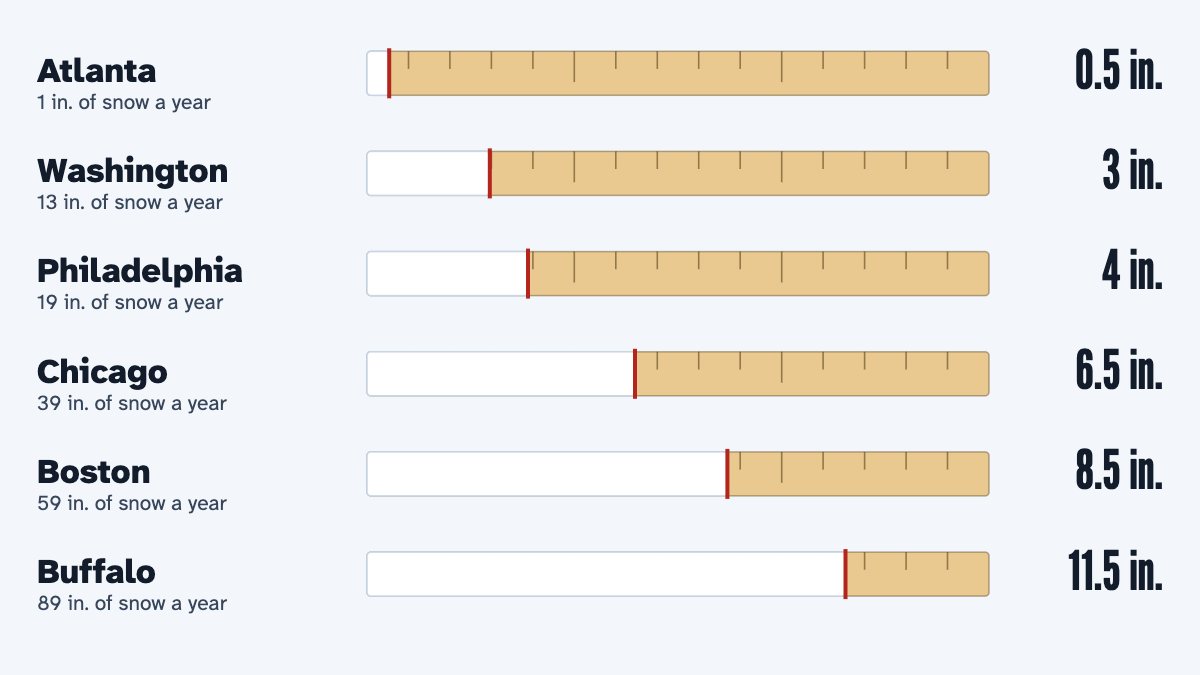
In a normal year Washington gets about a foot of snow: the calculator’s figure for the city is 12.7 inches. So by our rule of thumb, schools close about half the time at about 3 inches of overnight snow, and about a tenth of an inch of ice can do it too.
Type your ZIP code above to see the chance for your school, worked out from the National Weather Service forecast for your own spot.
For DC Public Schools (DCPS), the Mayor makes the call, there are no virtual snow days, and some snow days are made up at the end of the year, while a 2-hour delay is not (DCPS inclement weather guidance).
How much snow closes school in Washington, D.C.?
About 3 inches of overnight snow, by our rule of thumb. The calculator sets a place’s usual closing point from its normal snowfall, and Washington’s is modest.
Washington, D.C.: normal snowfall a year (NOAA 1991–2020) and the snowfall and wind chill at which, by our rule of thumb, schools there usually close.
| City | Normal snowfall | Usually closes at | Cold point (wind chill) |
|---|---|---|---|
| Washington | 12.7 in. a year | 3 in. of snow | −15°F |
Our rule of thumb: the usual closing point is 0.5 × (normal snowfall a year)0.7, the cold point the normal December–February low minus 45°F. How the calculator works.
The 12.7 inches is a blend: as it does for every place, the calculator weighs the NOAA stations nearest the city. Its cold point for Washington is a wind chill of about −15°F: the city’s normal December–February low of 29.7°F, minus 45 degrees.
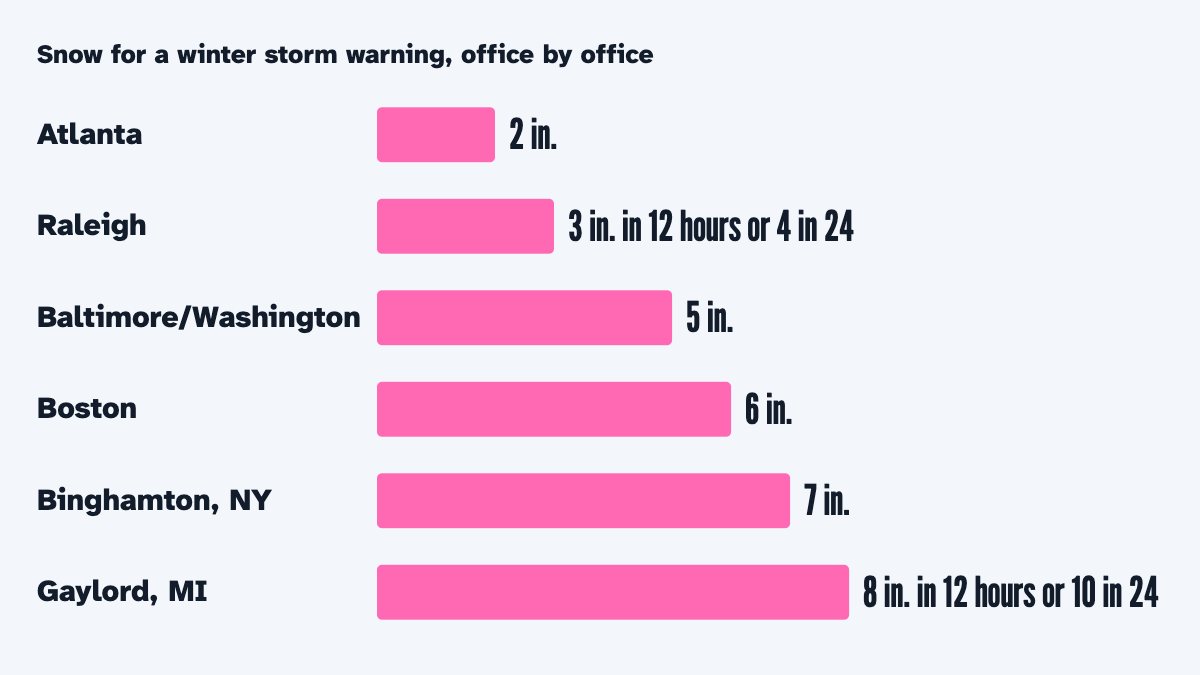
The local Weather Service office pays special attention to rush hour. The Baltimore/Washington office issues a Winter Storm Warning for 5 inches or more of snow or sleet (6 inches in the 6 western counties it covers), and a Winter Weather Advisory for 2 to 4 inches, or for just 1 inch during rush hours (4 to 9 a.m. and 2 to 7 p.m.) in the metro areas (NWS Baltimore/Washington). A warning raises the calculator’s chance more than an advisory does.
Timing counts in the calculator too: snow that falls overnight (9 p.m. to 6 a.m.) or while buses run (6 to 10 a.m.) counts fully, and snow from the afternoon before counts for less, since crews have hours to clear it.
Why do schools around Washington close for less snow?
Because big snows are uncommon here, roads take longer to clear. That is how a neighboring district, Fairfax County Public Schools in Virginia, puts it: the area “seldom gets significant amounts of snow” (Fairfax County Public Schools).
Our rule of thumb follows the same idea. The closing point grows with a place’s normal snowfall, so it is about 3 inches for Washington, against 6.5 for Chicago and 11.5 for Buffalo.
Do snow days have to be made up in Washington, D.C.?
At DC Public Schools, some do. DCPS says “State law requires us to have a minimum of 180 school days,” and that some snow days will be made up at the end of the year, with the make-up days announced each year (DCPS inclement weather guidance).
A delay is different. DCPS says a 2-hour delay is not a snow day and is not made up later, and it keeps early dismissals for extreme situations (DCPS inclement weather guidance).
What we could not find: the D.C. law or regulation behind the 180 days, how many make-up days the calendar builds in, and any waiver process. DCPS posts its school calendars, including 2026–27, on its calendars page.
Can D.C. schools switch to remote learning instead?
Not at DC Public Schools. If buildings must close for bad weather, DCPS says it will have “traditional snow days with no virtual instruction” (DCPS inclement weather guidance).
Public charter schools are not covered by that DCPS page, and we did not find their snow-day rules. If your child attends a charter school, check its own announcements.
How cold does it have to be to close school in Washington, D.C.?
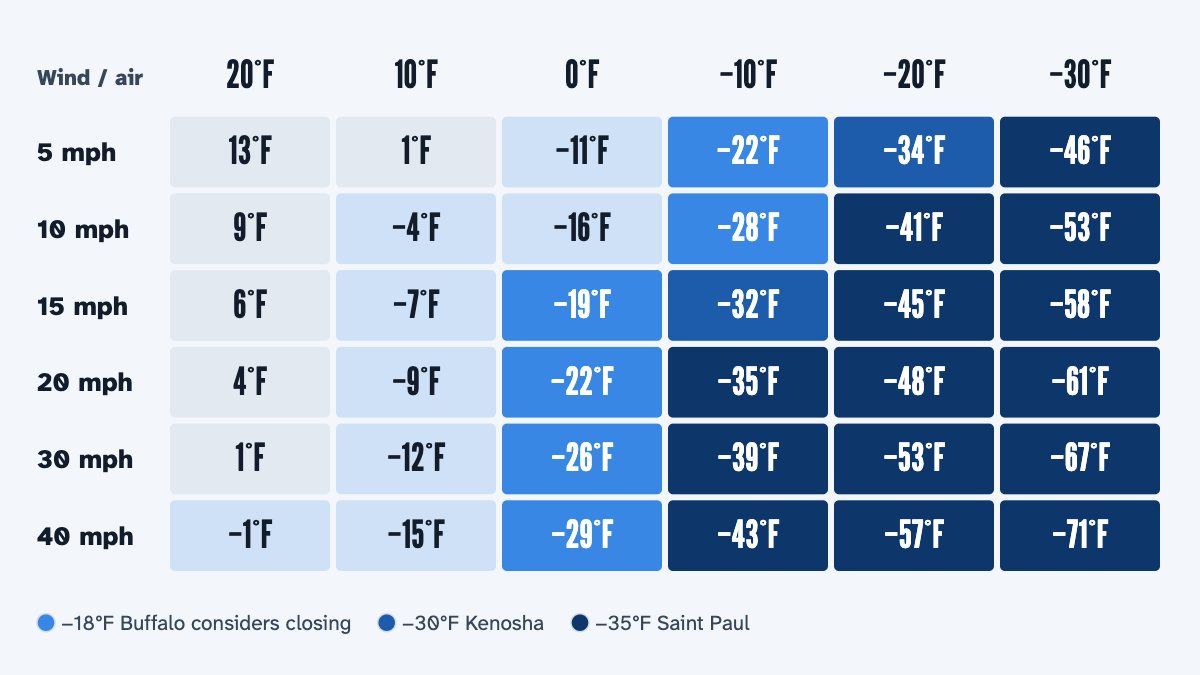
DCPS lists temperature and wind chill among the things weighed before a delay or closing, but we found no number on its page (DCPS inclement weather guidance). Our rule of thumb sets Washington’s cold point at a wind chill of about −15°F, read between 5 and 9 a.m.
The alert to watch is the Extreme Cold Warning, which means extremely dangerous cold or wind chills are expected or occurring (NWS cold alerts). It replaced the Wind Chill Warning on October 1, 2024 (National Weather Service), and each local office sets its own thresholds (NWS wind chill chart).
Who decides, and when do families hear?
For DC Public Schools, the Mayor. DCPS calls the choice to delay or close “a careful decision made by the Mayor,” informed by temperature and wind chill, snow and ice, road conditions and public transit. Families hear by email, text, dcps.dc.gov and social media (DCPS inclement weather guidance).
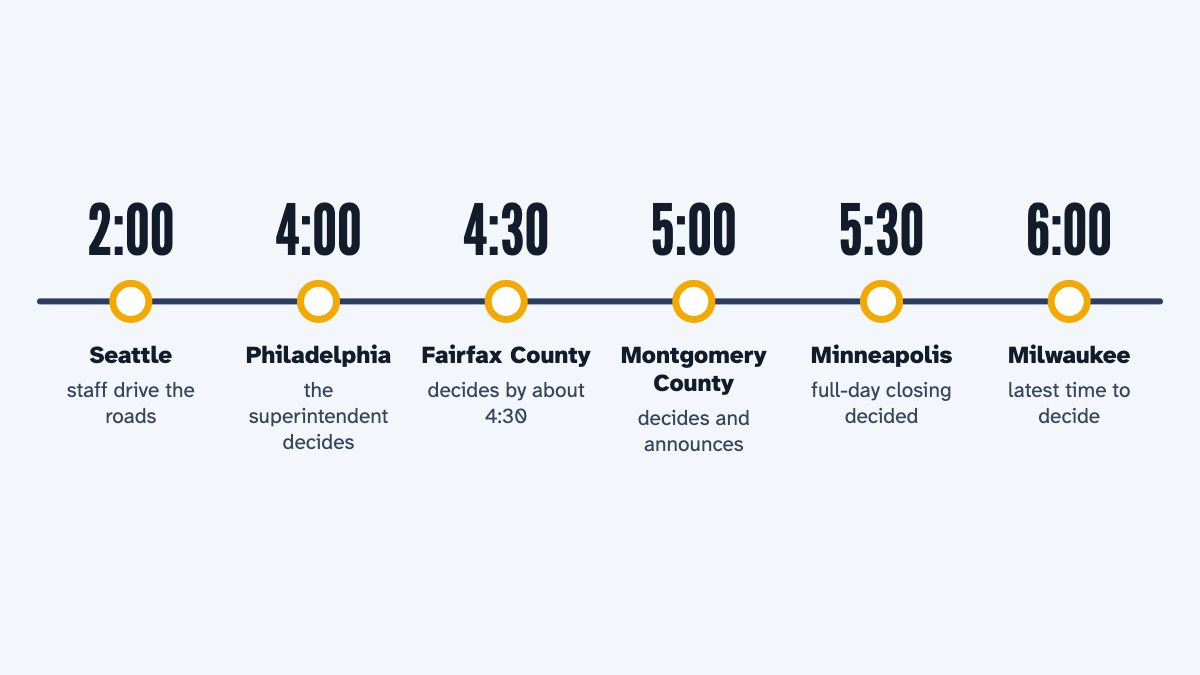
The neighbors run on early clocks, under their own rules. Fairfax County Public Schools aims to decide the evening before, and otherwise its superintendent decides by about 4:30 a.m. (Fairfax County Public Schools). Montgomery County Public Schools, in Maryland, makes an evening decision by 7 p.m. or a morning decision by 5 a.m., and decides on an early release by 10:30 a.m. (Montgomery County Public Schools).
The calculator reads snow and ice from 6 a.m. the day before to 3 p.m. on the school day, so look the evening before and again early in the morning. Forecasts change: the Weather Service office for the area says its snow warnings average close to 24 hours of notice, and that about 1 in 3 turns out to be a false alarm, often real snow that stayed below warning size (NWS Baltimore/Washington).
Snow days in Washington, D.C.
- Our rule
- About 3 inches of snow
- About 0.1 inch of ice
- Wind chill −15°F
- Weather Service
- Warning at 5 inches
- Advisory at 1 inch in rush hour
- DC Public Schools
- The Mayor decides
- No virtual snow days
- Make-up
- Some at year’s end
- Delays not made up
- Neighbors
- Fairfax by 4:30 a.m.
- Montgomery by 5 a.m.
Questions people ask
Does DCPS make up snow days?
Some of them. DC Public Schools says some snow days will be made up at the end of the year, with the make-up days announced each year. A 2-hour delay does not need to be made up (DCPS inclement weather guidance).
Who decides if D.C. public schools close for snow?
The Mayor, weighing temperature and wind chill, snow and ice, road conditions and public transit (DCPS inclement weather guidance).
Does DC Public Schools have virtual snow days?
No. If buildings close for bad weather, DCPS has traditional snow days with no virtual instruction (DCPS inclement weather guidance).
Do D.C. charter schools follow DCPS snow days?
The DCPS weather page does not cover public charter schools, and we did not find their own snow-day rules. Check your charter school’s announcements.
How much snow does it take to close school in D.C.?
By our rule of thumb, about 3 inches overnight. The Weather Service’s Baltimore/Washington office issues a Winter Weather Advisory for as little as 1 inch during rush hours in the metro areas (NWS Baltimore/Washington). Only DCPS, or your charter school, decides.
Sources: DC Public Schools inclement weather guidance, NWS Baltimore/Washington warning criteria and Fairfax County Public Schools weather procedures.
Facts checked October 29, 2026.
More guides
-
-
-
-

-
-