Utah Snow Day Calculator: Chances, Contingency Days and Waivers
By our rule of thumb, 7 to 9 inches of snow closes schools in Salt Lake City, Provo and Orem about half the time, and half an inch in St. George. Calendars must hold contingency days.

- Under 5%
- 5 to 24%
- 25 to 49%
- 50 to 74%
- 75% or more
The next school day in Utah
Worked out from the National Weather Service forecast, 3:07 PM EDT, Thursday.
- Salt Lake City<1% snow dayFriday: no snow
- West Valley City<1% snow dayFriday: no snow
- West Jordan<1% snow dayFriday: no snow
- Provo<1% snow dayFriday: no snow
- St. George<1% snow dayFriday: no snow
- Orem<1% snow dayFriday: no snow
In Utah, how much snow it takes depends on where you live. Salt Lake City’s normal snowfall is 60.1 inches a year and Provo’s 51.9, while St. George’s is 1.7, by NOAA’s 1991–2020 normals. By our rule of thumb, it takes about 9 inches of overnight snow for Salt Lake City schools to close about half the time, 8 inches in Provo and 7 in Orem, but only about half an inch in St. George.
The mountains are something else again: the weather station at Alta averages 458.3 inches of snow a year.
Utah changed its school-year rule in 2026. Since a change dated August 7, 2026, the State Board of Education’s rule R277-419 requires 180 instructional days “or equivalent instructional hours,” and it tells districts and charter schools to plan for weather in their calendars. If snow still pushes a district below the minimum, it can ask the State Superintendent for a waiver.
How much snow closes school in Utah?
About 7 to 9 inches in the larger cities on our Utah map, and about half an inch in St. George, by our rule of thumb. That is the overnight snow at which schools close about half the time, worked out from each city’s normal snowfall.
Utah's six largest cities: normal snowfall a year (NOAA 1991–2020) and the snowfall and wind chill at which, by our rule of thumb, schools there usually close.
| City | Normal snowfall | Usually closes at | Cold point (wind chill) |
|---|---|---|---|
| Salt Lake City | 60.1 in. a year | 9 in. of snow | −20°F |
| West Valley City | 48.9 in. a year | 7.5 in. of snow | −19°F |
| West Jordan | 57.9 in. a year | 8.5 in. of snow | −19°F |
| Provo | 51.9 in. a year | 8 in. of snow | −20°F |
| St. George | 1.7 in. a year | 0.5 in. of snow | −15°F |
| Orem | 45 in. a year | 7 in. of snow | −20°F |
Our rule of thumb: the usual closing point is 0.5 × (normal snowfall a year)0.7, the cold point the normal December–February low minus 45°F. How the calculator works.
Salt Lake City (60.1 inches a year) has the highest closing point of the six, near 9 inches. West Jordan (57.9) is near 8.5, Provo (51.9) near 8, West Valley City (48.9) near 7.5 and Orem (45) near 7. St. George, with 1.7 inches a year, rounds to half an inch, as Chattanooga and Clarksville do on our Tennessee page.
Higher ground gets much more. The Bountiful Bench station, about 4,950 feet up, averages 118.9 inches a year, nearly twice Salt Lake City’s normal. If your district closes more or less easily than the city near you, tell the calculator; that setting moves the closing point.
How much snow would close school here?
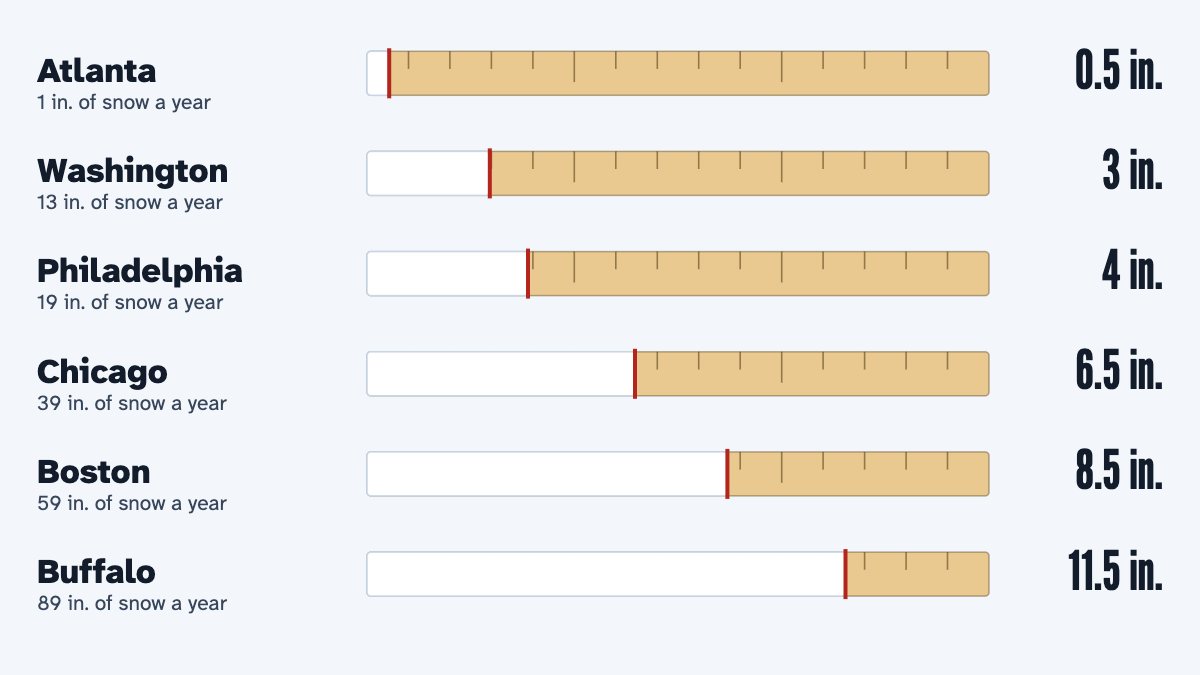
Philadelphia, PA (about 19 in. of snow a year), with 4 in. overnight: snow day 52%, late start 43%, school as usual 5%. By our rule of thumb, schools there usually close at about 4 in.
Worked out with the calculator's own rules for a plain storm: the snow falls between 9 PM and 6 AM, it is 25°F with little wind, and no Weather Service warning is out. A real forecast also counts timing, ice, cold and alerts.
Try it: pick a city in the tool above, move the overnight-snow slider, and watch the chances of a snow day, a late start and school as usual change. Snow that falls overnight (9 PM to 6 AM) or while buses run (6 to 10 AM) counts fully, and snow falling above freezing counts less. More on how the calculator works.
Where does Utah get the most snow?
In the mountains, by a mile. Alta, about 8,710 feet up, averages 458.3 inches a year, the most of NOAA’s 122 Utah weather stations. The station at the Scofield-Skyline Mine averages 225.4 inches and Snyderville 152.9, and Bountiful Bench (118.9) and City Creek (113.5) also top 100 inches.
Normal snowfall a year and normal December to February low at each of the 122 weather stations in Utah with a snowfall normal in NOAA's U.S. Climate Normals for 1991–2020, with each station's location, elevation and how complete its record is.
The 10 snowiest and 5 least snowy of 122 stations in Utah
| Station | Normal snowfall | Dec–Feb low | Elevation |
|---|---|---|---|
| Alta | 458.3 in. | 15°F | 8,710 ft |
| Scofield-skyline Mine | 225.4 in. | 13°F | 8,697 ft |
| Snyderville | 152.9 in. | — | 6,485 ft |
| Beaver Canyon Pwr House | 120.5 in. | 16°F | 7,275 ft |
| Bountiful Bench | 118.9 in. | 24°F | 4,950 ft |
| City Creek Wtp | 113.5 in. | 21°F | 5,340 ft |
| Pineview Dam | 107.9 in. | 12°F | 4,940 ft |
| Fairview 8N | 106.2 in. | — | 6,750 ft |
| Kamas | 96.9 in. | 16°F | 6,481 ft |
| Bryce Canyon Np Hqrs | 86.7 in. | 17°F | 7,890 ft |
| … | |||
| Zion Np | 4 in. | 31°F | 4,038 ft |
| Mexican Hat | 2.3 in. | 24°F | 4,109 ft |
| La Verkin | 1.4 in. | 30°F | 3,194 ft |
| Lytle Rch | 1.4 in. | 33°F | 2,787 ft |
| St George | 1.2 in. | 30°F | 2,857 ft |
Download “Normal snowfall at Utah weather stations, 1991–2020” (CSV, opens in Excel)
Built from: U.S. Climate Normals, 1991–2020 (National Centers for Environmental Information).
Half the stations average 37.2 inches or more. At the other end, the St. George station averages 1.2 inches, La Verkin and Lytle Ranch 1.4 each, Mexican Hat 2.3 and Zion National Park 4.0. A district near the mountains and one in St. George follow the same state rules in very different winters.
Do snow days have to be made up in Utah?
Utah’s answer is to plan for them ahead of time. R277-419 says each district or charter school “shall plan for emergency, activity, and weather-related exigency time” in its yearly calendar, with enough contingency days to avoid asking for a waiver except in the most extreme circumstances. Calendars and total instructional time are approved in an open meeting.
If closings still leave a district short of 180 days, R277-121 lets it ask the State Superintendent directly for a waiver. The Superintendent may grant one for excessive snow, bad weather or another emergency without a vote of the full Board, if the district built in contingency days or has another plan, and a denial can be appealed to the full Board. The rules we read set no fixed number of free snow days.
The 2026 changes reach the law too. Utah’s school-finance law, Utah Code 53F-2-102, amended in the 2026 General Session, has the State Board set the number of instructional days or equivalent instructional hours. The State Board’s 2024 FAQ says Utah dropped its separate 990-hour requirement in 2023, except for schools with four-day-week waivers, and that schools are not expected to serve meals on a weather closing.
Can Utah schools switch to remote learning instead?
The rules recognize it, but the text we read sets no limit. R277-419 mentions an “unplanned learn from home day due to snow” and days when all of a district’s students learn at a distance, in its section on school meals. We read that as treating such days as part of the school year, but the rule names no cap and no approval step that we could find.
Utah’s school-finance law, 53F-2-102, also gives full support to technology-delivered education that a district’s governing board has approved. So ask your district or charter school whether it uses learn-from-home days for snow, and how many.
How cold does it have to be to close school in Utah?
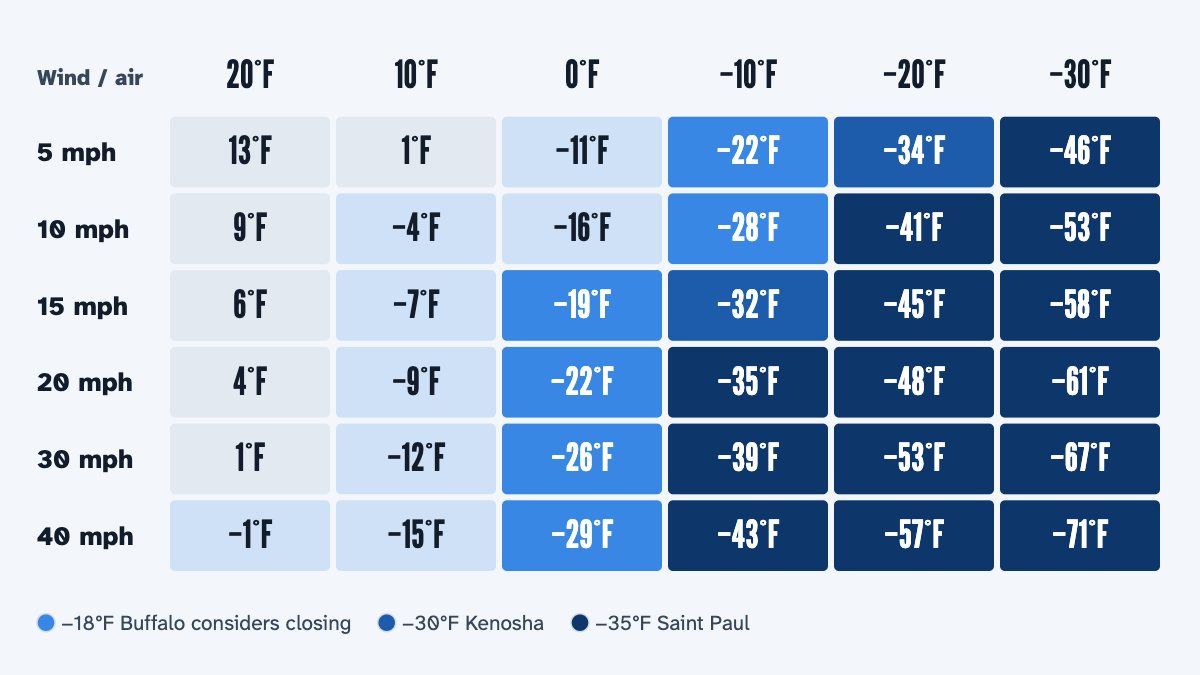
Far colder than a normal winter morning, by our rule of thumb: a wind chill near −19°F at bus time in West Valley City and West Jordan, −20°F in Salt Lake City, Provo and Orem, and −15°F in St. George. That is each city’s normal December–February low minus 45°F. We have no Utah district’s own cold number on file.
The calculator reads the wind chill from 5 to 9 AM and adds to its chance when the National Weather Service issues an Extreme Cold Warning (the name since about October 1, 2024, for what was the Wind Chill Warning) or a Cold Weather Advisory. The Weather Service’s wind chill chart notes that bright sunshine “may increase the wind chill temperature by 10°F to 18°F,” so a sunny morning can feel less harsh than the number suggests.
Who decides, and when do Utah families hear?
Your district or charter school. The state’s waiver rule speaks of the district or charter school that “closes a school due to excessive snow,” and it is that local body that asks for any waiver.
We have not found a Utah district’s announcement clock, so check your district’s or charter school’s website, app or local TV and radio for the final word. The calculator reads the National Weather Service forecast from 6 AM the day before to 3 PM on the school day, so its chance can change as the storm gets closer.
It is independent: not a school, a district, the State Board or the Weather Service. It shows the reasons behind each chance so you can judge them.
The page at a glance:
Snow days in Utah
- What closes schools
- 7 to 9 inches in Salt Lake City and Provo
- half an inch in St. George
- Where it snows
- Alta 458 inches
- Bountiful Bench 119 inches
- St. George 1 inch
- School year
- 180 days or equal hours
- rule changed in August 2026
- Make-up
- contingency days in every calendar
- waiver from the State Superintendent
- Remote days
- learn-from-home days named
- no cap in the rule we read
Questions people ask
How many snow days do Utah schools get?
The state does not set a number. Each district or charter school builds contingency days into its own calendar under R277-419, so the count is on your district’s calendar.
Do Utah schools have to make up snow days?
They plan for them with contingency days. If closings still push a district below 180 days, it can ask the State Superintendent for a waiver under R277-121, which names excessive snow as a reason.
Does Utah have virtual snow days?
The state rule mentions unplanned learn-from-home days for snow, but the text we read sets no cap or approval step. Whether your schools use them is your district’s or charter school’s call.
How much snow does it take to cancel school in Salt Lake City?
About 9 inches overnight, by our rule of thumb: the amount at which Salt Lake City schools close about half the time. Timing and wind can move it, and only the district decides.
Do Utah schools serve lunch on snow days?
Not on a closed day. The State Board’s FAQ says there is no expectation or requirement to serve meals during weather closings.
Sources: Utah Admin. Code R277-419; Utah Admin. Code R277-121; Utah Code 53F-2-102.
Facts checked October 29, 2026.
More guides
-
-
-
-

-
-