Alaska Snow Day Calculator: Chances, Cold and Emergency Days
Alaska schools close for heavy snow or extreme cold: about 6 to 12.5 inches of snow by our rule of thumb. The state’s education commissioner decides whether closed days count.

- Under 5%
- 5 to 24%
- 25 to 49%
- 50 to 74%
- 75% or more
The next school day in Alaska
Worked out from the National Weather Service forecast, 3:07 PM EDT, Thursday.
- Anchorage<1% snow dayFriday: no snow
- Fairbanks<1% snow dayFriday: a dusting of snow
- Juneau<1% snow dayFriday: no snow
- Wasilla<1% snow dayFriday: no snow
- Sitka<1% snow dayFriday: no snow
- Ketchikan<1% snow dayFriday: no snow
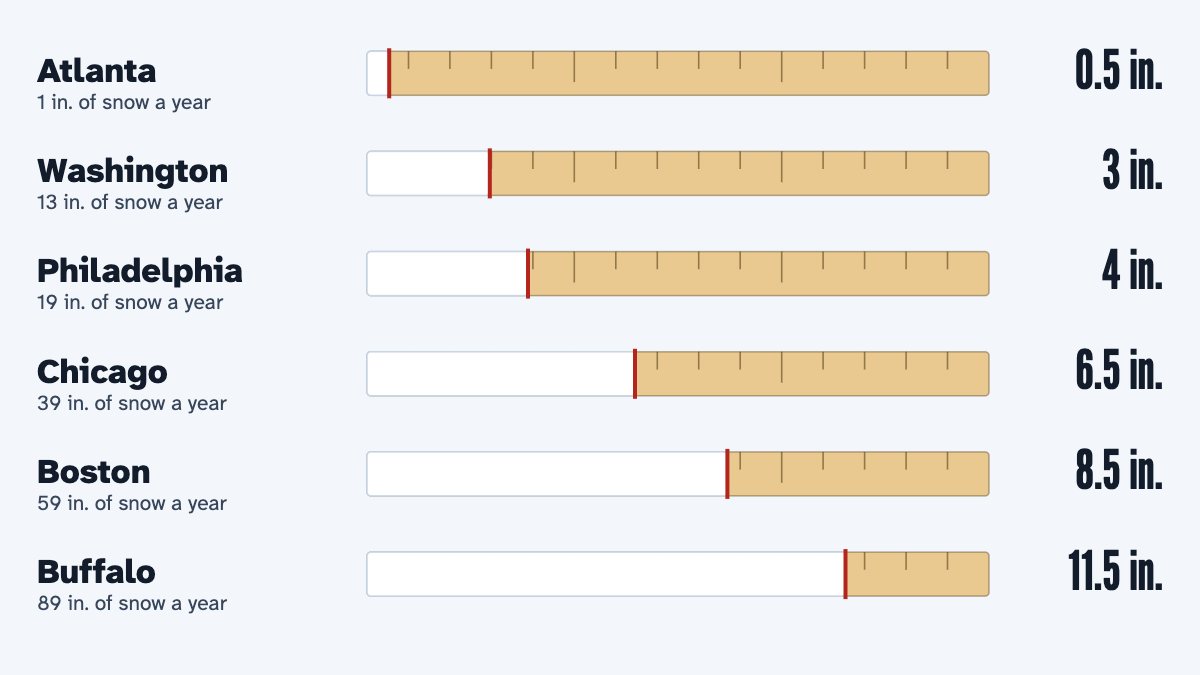
An Alaska snow day takes a lot of snow. Anchorage averages 76.9 inches a year and Juneau 84.4, so by our rule of thumb schools there close about half the time at about 10.5 and 11 inches of overnight snow. In Sitka, with 101.8 inches a year, it takes about 12.5. Type your ZIP code above to see the chance for your school, from the National Weather Service forecast.
Cold is the other side of an Alaska winter. Fairbanks has a normal December–February low of −9.3°F, so our rule puts its cold point at a wind chill of about −54°F. Anchorage and Wasilla sit near −35°F.
When schools do close, Alaska law asks for 180 days in session, and the state’s education commissioner can approve closed days as emergency closure days (Alaska Statutes 14.03.030). Otherwise the district adds days to its calendar, or trims extra days if it planned more than 180 (4 AAC 05.090).
How much snow closes school in Alaska?
About 6 to 12.5 inches of overnight snow, by our rule of thumb, depending on the town. The calculator sets each place’s usual closing point from its normal snowfall, and Alaska’s 6 map cities spread out widely.
Alaska's six largest cities: normal snowfall a year (NOAA 1991–2020) and the snowfall and wind chill at which, by our rule of thumb, schools there usually close.
| City | Normal snowfall | Usually closes at | Cold point (wind chill) |
|---|---|---|---|
| Anchorage | 76.9 in. a year | 10.5 in. of snow | −35°F |
| Fairbanks | 58.6 in. a year | 8.5 in. of snow | −54°F |
| Juneau | 84.4 in. a year | 11 in. of snow | −20°F |
| Wasilla | 66.3 in. a year | 9.5 in. of snow | −35°F |
| Sitka | 101.8 in. a year | 12.5 in. of snow | −13°F |
| Ketchikan | 34.8 in. a year | 6 in. of snow | −13°F |
Our rule of thumb: the usual closing point is 0.5 × (normal snowfall a year)0.7, the cold point the normal December–February low minus 45°F. How the calculator works.
Sitka is the snowiest of the 6, with 101.8 inches in a normal year, and has the highest closing point, 12.5 inches. Juneau (84.4 inches a year) follows at 11, Anchorage (76.9) at 10.5, Wasilla (66.3) at 9.5 and Fairbanks (58.6) at 8.5. Ketchikan, with 34.8 inches a year, needs only about 6.
Sitka and Ketchikan have the mildest winter nights of the 6, with normal lows of 31.7°F and 31.9°F. The calculator counts snow that falls while the air is above freezing for less, because roads stay wet. Snow that falls overnight (9 p.m. to 6 a.m.) or while buses run (6 to 10 a.m.) counts fully, and if your district rarely closes, or closes easily, you can tell the calculator and it moves the closing point.
Where does Alaska get the most snow?
Not on mountaintops: Alaska’s 3 snowiest NOAA stations sit near sea level. Of 82 Alaska stations with a snowfall normal for 1991–2020, the snowiest is Valdez, at about 95 feet, with 325.3 inches a year. Whittier (268.2 inches, about 60 feet up), Main Bay (261.8), Haines 40NW (245.1) and Alyeska (214.5) follow.
Normal snowfall a year and normal December to February low at each of the 82 weather stations in Alaska with a snowfall normal in NOAA's U.S. Climate Normals for 1991–2020, with each station's location, elevation and how complete its record is.
The 10 snowiest and 5 least snowy of 82 stations in Alaska
| Station | Normal snowfall | Dec–Feb low | Elevation |
|---|---|---|---|
| Valdez | 325.3 in. | 21°F | 95 ft |
| Whittier | 268.2 in. | 25°F | 60 ft |
| Main Bay | 261.8 in. | 22°F | 57 ft |
| Haines 40NW | 245.1 in. | 14°F | 820 ft |
| Alyeska | 214.5 in. | 18°F | 272 ft |
| Haines #2 | 163.9 in. | 20°F | 95 ft |
| Glen Alps | 161.9 in. | 15°F | 2,202 ft |
| Cannery Creek | 151.4 in. | 21°F | 85 ft |
| Yakutat State Airport | 147.3 in. | 24°F | 33 ft |
| Pelican | 111.7 in. | 28°F | 12 ft |
| … | |||
| Kitoi Bay | 36.8 in. | 26°F | 60 ft |
| Chicken | 36.6 in. | −25°F | 1,800 ft |
| Kuparuk | 35.5 in. | −20°F | 64 ft |
| Annette Island Airport | 34.8 in. | 33°F | 109 ft |
| Port Alcan | 27.4 in. | −16°F | 1,892 ft |
Download “Normal snowfall at Alaska weather stations, 1991–2020” (CSV, opens in Excel)
Built from: U.S. Climate Normals, 1991–2020 (National Centers for Environmental Information).
Even the least snowy stations get plenty. Port Alcan averages 27.4 inches a year, Annette Island 34.8 and Kuparuk 35.5, and the middle of the list is about 64.5 inches. The calculator blends the NOAA stations nearest your ZIP code. For the snowiest places its closing point tops out at 15 inches, the most the rule allows anywhere.
Do snow days have to be made up in Alaska?
Not always. Alaska law asks for at least 180 days in session, but with the commissioner’s approval up to 10 in-service days can stand in for days with students, and an “emergency closure day” can replace a day in session when conditions threaten students’ health or safety (Alaska Statutes 14.03.030).
So a year that uses all 10 in-service days has 170 days with students, before any emergency closure days (Alaska Statutes 14.03.030). The state’s Department of Education and Early Development drew the same line in guidance written for COVID-19 closures: if a closure left fewer than 170 days in session, the district needed a waiver from the commissioner unless it made the days up (COVID-19 closure guidance).
After a closure, the superintendent sends the state a changed calendar. It can add days to replace the closed ones, cut days only if the original calendar had more than 180, or name the closed days as emergency closure days for the commissioner to approve (4 AAC 05.090). The commissioner may approve all, some or none of them.
Among the things the commissioner weighs are whether the district ran a plan to keep teaching during the closure and how good that teaching was, how it used any warning to prepare, how it kept in touch with families, what kind of emergency it was and how long it lasted, and the public interest (4 AAC 05.090). There is no fixed number of free weather days.
A day in session has to last at least 4 hours for grades 1 to 3 and 5 hours for grades 4 to 12, not counting breaks (Alaska Statutes 14.03.040). A district can instead adopt a school year of at least 740 hours for kindergarten to grade 3 and 900 hours for grades 4 to 12, with an approved plan (Alaska Statutes 14.03.030).
Can Alaska schools switch to remote learning instead?
We found no Alaska rule that counts a remote day as a day in session by itself. But the first things the commissioner weighs, when deciding whether to approve emergency closure days, are whether the district ran a plan to keep teaching during the closure and how good that teaching was (4 AAC 05.090).
So remote lessons can help a district’s case, but the commissioner decides. Ask your district what its plan for a closure says.
How cold does it have to be to close school in Alaska?
We found no state cold rule, and no Alaska district’s cold number in our research. Our rule of thumb watches the wind chill from 5 to 9 a.m., around the time children wait for buses, and marks a cold point for each city: about −13°F in Sitka and Ketchikan, −20°F in Juneau, −35°F in Anchorage and Wasilla, and −54°F in Fairbanks.
Each cold point is the city’s normal December–February low minus 45 degrees, kept between −60°F and 0°F. Fairbanks, with a normal low of −9.3°F, has the coldest, about −54°F.
Wind chill at the bus stop
−19°F
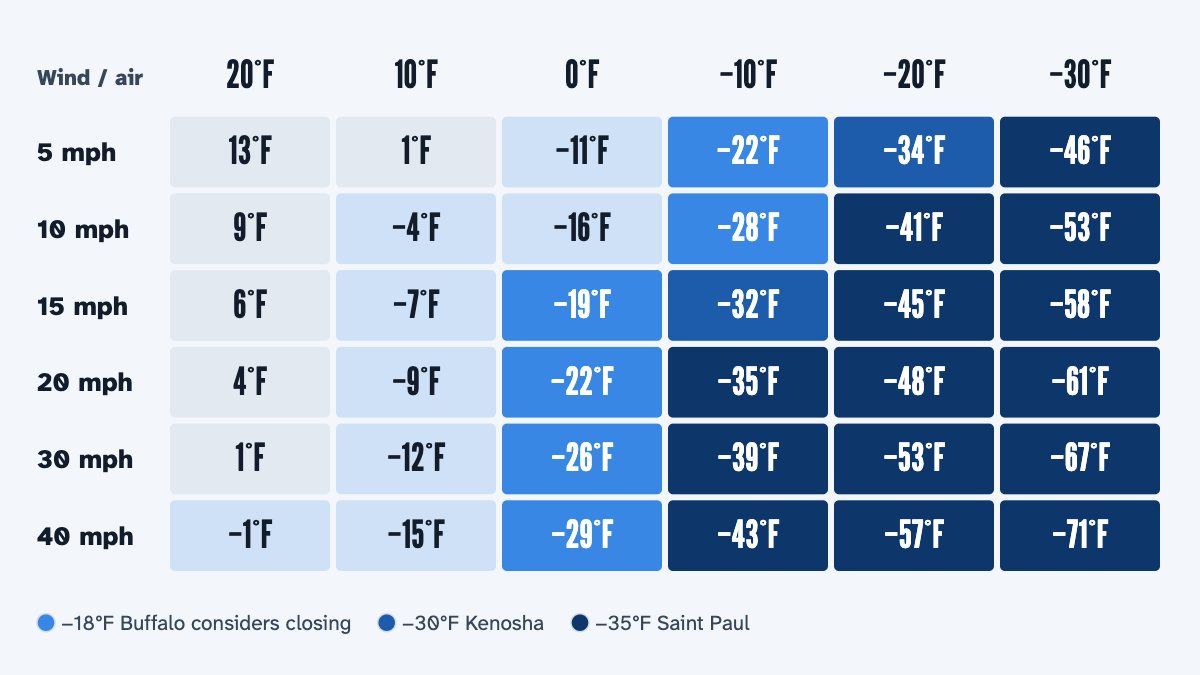
0°F with a 15 mph wind feels like −19°F. Buffalo, New York, will consider closing at −18°F.
The formula is the National Weather Service's, from its wind chill chart. Its own example: 0°F with a 15 mph wind feels like −19°F, and exposed skin can freeze in 30 minutes.
The National Weather Service’s wind chill chart shows how fast cold bites: 0°F with a 15 mph wind feels like −19°F, and exposed skin can freeze in 30 minutes. Its formula is defined only for 50°F or colder with winds above 3 mph, and the Weather Service asks people to be even more careful with children (NWS wind chill chart). The chart’s colder bands mark frostbite in 10 and in 5 minutes (NWS wind chill brochure).
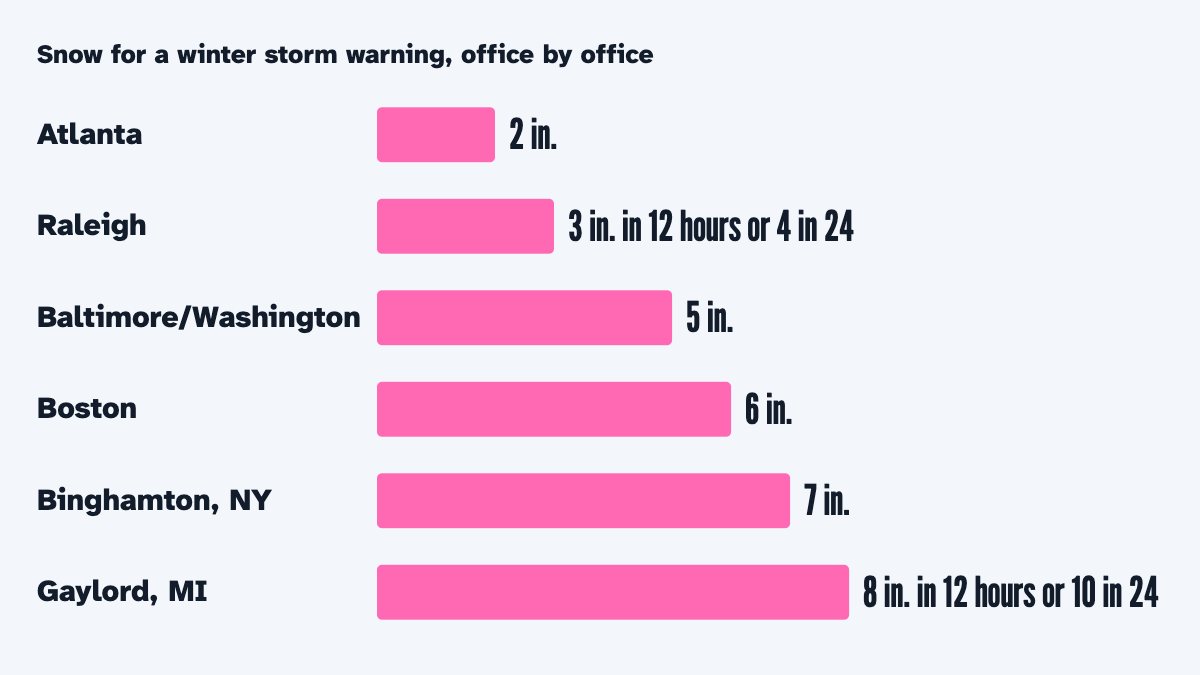
The alert to watch is the Extreme Cold Warning, which means extremely dangerous cold or wind chills are expected or occurring (NWS cold alerts). It replaced the Wind Chill Warning on October 1, 2024 (National Weather Service). Each local office sets its own thresholds (NWS wind chill chart), and the calculator raises the chance when one is out for your area.
Who decides, and when do families hear?
The superintendent orders a closure. Under state rules, a superintendent may close schools when it is needed to protect the health or safety of students, staff or the community, and must tell the state in writing within 24 hours (4 AAC 05.090).
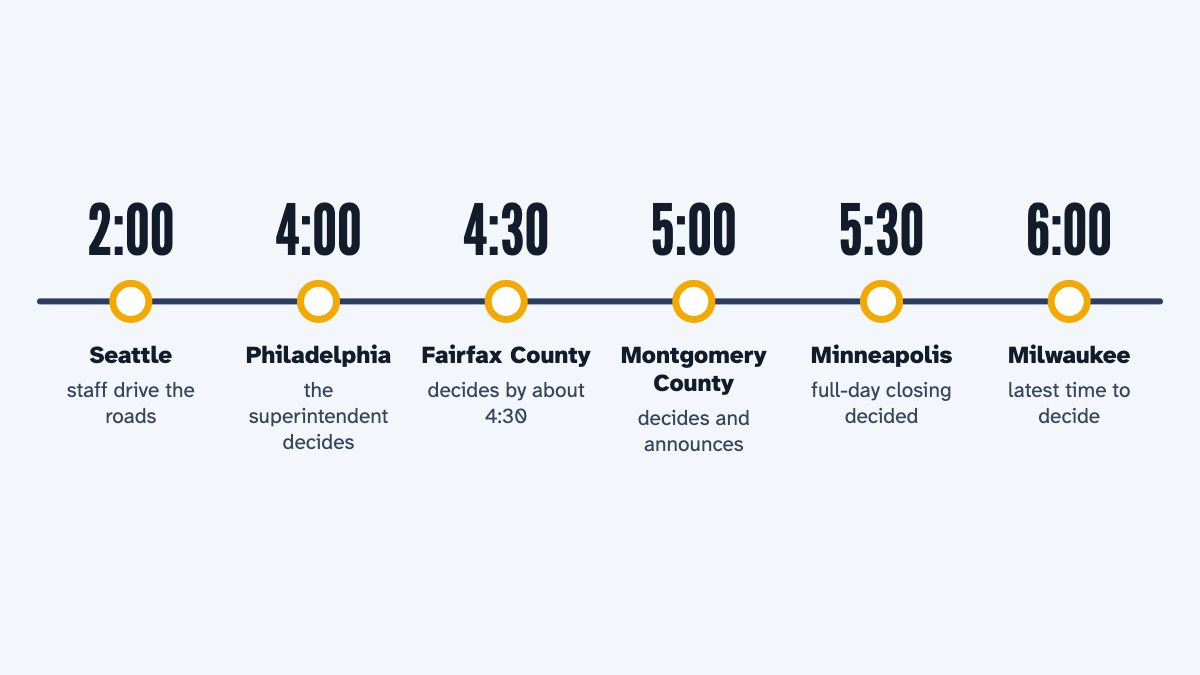
In Anchorage, staff gather weather and road information and advise the superintendent, who decides. The district aims to give public notice by 5:30 a.m., with exceptions when conditions change fast, and says: “The absence of a notice indicates there are no delays or closures” (Anchorage School District).
Anchorage weighs more than safety: child care for families, its limited number of snow days, state testing dates and seniors’ credit hours. It does not robocall families about a district-wide closure, because there is not enough morning time for thousands of calls, and it decides on after-school activities around noon if conditions worsen (Anchorage School District).
Elsewhere in Alaska, check your district’s website, app or local radio and TV. The calculator reads snow from 6 a.m. the day before to 3 p.m. on the school day, so look the evening before and again early in the morning, since forecasts change.
Snow days in Alaska
- Closing snow
- Ketchikan about 6 inches
- Anchorage about 10.5
- Sitka about 12.5
- Cold
- Wind chill at bus time
- Anchorage −35°F
- Fairbanks −54°F
- Closed days
- 180 days in session
- Commissioner may approve
- Or add make-up days
- Remote lessons
- No automatic credit
- Can help the request
- Who decides
- The superintendent
- Anchorage notice by 5:30 a.m.
Questions people ask
How many snow days does Alaska allow?
There is no fixed number. The commissioner judges each request and may approve all, some or none of the closed days as emergency closure days (4 AAC 05.090). Otherwise the district adds days to its calendar, or trims extra days if it planned more than 180.
What is an emergency closure day in Alaska?
It is a day a school was closed because conditions threatened students’ health or safety, which the commissioner approves to count in place of a day in session (Alaska Statutes 14.03.030). The district applies on a state form after the closure (4 AAC 05.090).
What time does Anchorage announce snow days?
The Anchorage School District aims to give public notice by 5:30 a.m., with exceptions when conditions change fast. If there is no notice, there is no delay or closure (Anchorage School District).
Will school be closed tomorrow in Alaska?
Type your school’s ZIP code at the top of this page. The calculator reads the National Weather Service forecast for that spot and shows the chance of a snow day, a late start or school as usual, with its reasons. Only your district decides, so watch its website, app or local news.
Sources: Alaska Statutes 14.03.030 (the school term), 4 AAC 05.090 (emergency closures) and Anchorage School District weather page.
Facts checked October 29, 2026.
More guides
-
-
-
-

-
-